

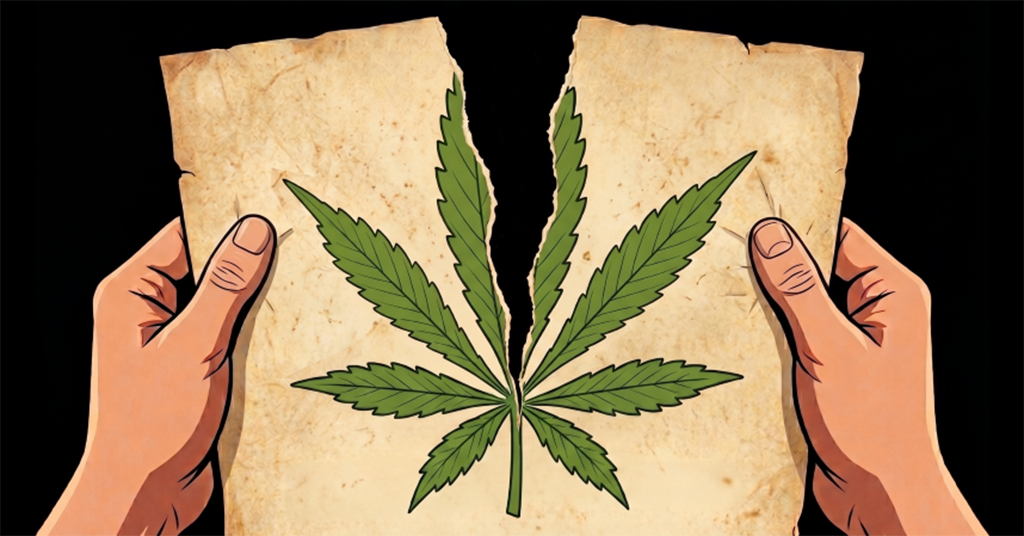
Cannabis Policy in 2026: Setbacks, Rollbacks, and Emerging Roadblocks
For more than a decade, the United States has witnessed a steady shift toward cannabis legalization. After Colorado and Washington became the first states to approve adult‑use cannabis in 2012, the number of states with regulated medical or recreational markets has grown to forty. Public opinion remains broadly favorable, with national polls consistently showing majority support for both medical and recreational access.
Yet 2026 has introduced a countervailing trend. While some jurisdictions continue to expand access, others are testing the limits of that momentum by seeking to repeal existing laws, amend voter‑approved measures, or create procedural hurdles that keep new legalization initiatives off the ballot. The following sections examine these developments in detail, drawing on the latest state‑level actions reported by the Rockefeller Institute of Government.
Efforts to Repeal Established Cannabis Programs
The most direct challenges to legalization have taken the form of ballot initiatives aimed at dismantling already‑operating recreational markets.
- Massachusetts – A certified initiative would retain the state’s medical cannabis program but repeal the statutory language governing adult‑use possession, use, distribution, cultivation, and taxation. Limited possession of up to one ounce for adults 21 and older would remain legal. The measure, which followed the 2016 voter‑approved legalization, still needs either legislative approval or additional signature collection to appear on the 2026 ballot. A lawsuit filed by Massachusetts cannabis businesses seeking to block the initiative is pending.
- Arizona – The Arizona Repeal Marijuana Legalization Initiative has cleared the signature‑gathering stage and must collect 255,949 valid signatures by July 2, 2026, to qualify for the ballot. If successful, it would overturn many provisions of Proposition 207 (2020), eliminating the commercial recreational market while still allowing limited home cultivation.
- Maine – A similar repeal effort failed to gather enough valid signatures for the 2026 ballot, though organizers have announced plans to try again for the 2027 election.
As noted in the original analysis, none of these attempts have yet succeeded at the ballot box, but they represent an unprecedented scenario: voters would be deciding whether to dismantle a regulated cannabis industry that has already taken root.
Adding to the pressure, Oklahoma Governor Kevin Stitt used his 2026 State of the State address to urge lawmakers to refer the state’s medical cannabis program back to a public vote, arguing that the industry has grown beyond its original intent. Opponents of legalization cite concerns about youth access, impaired driving, and aggressive marketing, while supporters warn that repealing legal markets could revive illicit sales and erode tax revenues that currently fund substance‑abuse prevention, education, and equity programs.
Legislative Rollbacks of Voter‑Approved Measures
In several states, lawmakers have moved to amend or override policies that were originally enacted through citizen initiatives.
Ohio – After voters approved Issue 2 in November 2023 (57 % support), the Republican‑controlled General Assembly exercised its authority to modify the statutory initiative. Senate Bill 56, enacted in early 2026, imposed stricter THC limits, re‑criminalized public consumption and the transport of legally purchased cannabis from other states, removed anti‑discrimination protections related to cannabis use, reduced home‑cultivation allowances from twelve to six plants, and redirected the cannabis sales tax toward law‑enforcement and jail construction instead of the originally earmarked local‑government, substance‑abuse, and social‑equity programs. A subsequent referendum attempt to overturn these changes fell short of the required signatures, so the bill’s provisions took effect on March 20, 2026, amid ongoing litigation.
Arkansas – The state Supreme Court ruled unanimously that the General Assembly may amend citizen‑initiated constitutional amendments with a two‑thirds vote in each chamber. The decision upheld legislative changes to the 2016 Medical Marijuana Amendment that banned smoking or vaping cannabis, limited THC levels in edibles, and prohibited advertising. This ruling overturns a 1951 precedent and signals that voter‑approved cannabis measures are not immune to legislative revision.
These examples illustrate a growing tension between direct democracy and legislative authority, especially when voter‑approved statutes are structured as ordinary statutes rather than constitutional amendments.
Procedural Roadblocks Preventing New Legalization Initiatives
Opponents have also focused on making it harder for new legalization measures to reach voters in the first place.
Florida – The state already requires a 60 % supermajority for constitutional amendments, a threshold raised in 2006 by a ballot measure that itself passed with only 57 % support. After the 2024 recreational cannabis initiative fell short at 55.9 %, supporters began preparing for a 2026 attempt. In the interim, the legislature passed House Bill 1205, which added several procedural barriers:
- Petition signers must now provide a driver‑license number, state ID number, or the last four digits of their Social Security number.
- Petition collectors must complete registration and training.
- Sponsors must post a $1 million bond once they reach 25 % of the required signatures.
- The timeline for submitting petition forms was shortened.
- New fines and potential felony charges were created for violations of the petition rules.
State officials later invalidated more than 70,000 submitted signatures, including those from “inactive” voters who had not confirmed their addresses. A legal challenge to that dismissal was rejected by the Florida Supreme Court, keeping the 2026 recreational cannabis measure off the ballot.
Idaho – While Idaho remains one of the few states without any form of legalized cannabis, two competing measures are slated for the 2026 ballot. The Idaho Medical Marijuana Legalization Initiative seeks to gather 70,725 valid signatures by May 1, 2026, to qualify. Simultaneously, a legislatively referred constitutional amendment (Idaho HJR 4) would strip citizens of the ability to initiate statutes that legalize cannabis or other psychoactive substances, leaving such decisions solely to the legislature. The legislature has also issued Senate Concurrent Resolution No. 127, urging voters to reject the medical cannabis initiative. If both appear on the ballot, Idahoans will face a choice: approve medical access while simultaneously giving up the future right to pursue cannabis‑related citizen initiatives.
Conclusion
The developments of 2026 reveal that the trajectory of cannabis policy in the United States is no longer a simple story of steady expansion. Instead, the landscape is becoming more nuanced:
- Repeal efforts in Massachusetts, Arizona, and (potentially) Maine test whether voters are willing to reverse legalization after years of regulated markets.
- Legislative rollbacks in Ohio and Arkansas demonstrate how elected bodies can reshape—or effectively overturn—voter‑approved statutes, particularly when those statutes are not entrenched as constitutional amendments.
These trends suggest that the next phase of the cannabis debate will involve defending existing programs from repeal, limiting legislative overreach, and safeguarding the initiative process itself. As the Rockefeller Institute of Government observes, the battles of 2026 may mark the beginning of a new chapter—one defined less by rapid adoption and more by the contested consolidation of cannabis policy across the nation.
Heather Trela is director of operations and fellow at the Rockefeller Institute of Government.
Source: Here