
Supreme Court Unanimously Affirms Gun Rights for Cannabis Users
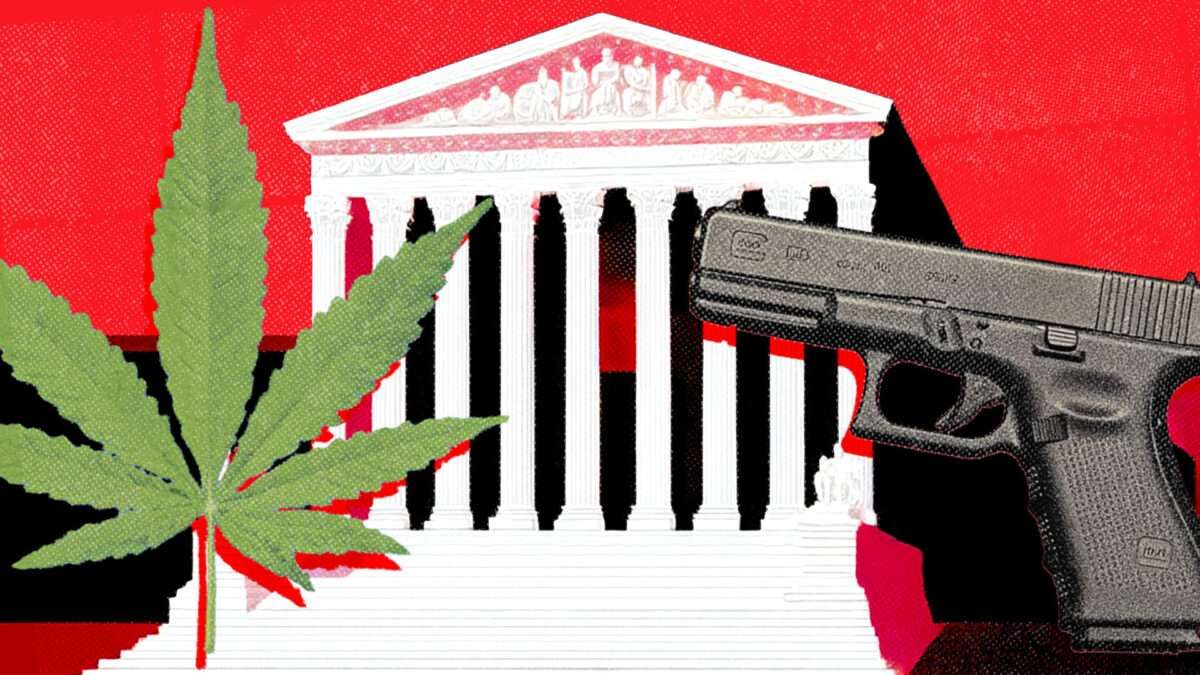
In a rare moment of agreement across ideological lines, the United States Supreme Court ruled that the federal prohibition on firearm possession for “unlawful users” of controlled substances cannot be applied simply because someone uses marijuana. The decision, delivered unanimously, hinges on the Court’s interpretation of the Second Amendment and rejects the notion of a “drug exception” to the Bill of Rights.
Background of the Case
The case originated with Ali Hemani, a Texas resident who admitted to owning a pistol and using marijuana a few times each week. Federal prosecutors charged him under 18 U.S.C. § 922(g)(3), which makes it a felony—punishable by up to 15 years in prison—for any person who is an “unlawful user” of a controlled substance to possess a firearm. A federal district court dismissed the charge on Second Amendment grounds, and the U.S. Court of Appeals for the Fifth Circuit affirmed that dismissal.
The Fifth Circuit, often characterized as the nation’s most conservative federal appellate court, concluded that prosecuting Hemani based solely on his status as a marijuana user conflicted with the historical tradition of firearm regulation that the Court has repeatedly cited as the touchstone for Second Amendment analysis.
Legal Reasoning and the “Drug Exception” Myth
Writing for the Court, Justice Neil Gorsuch emphasized that the government’s reliance on historical “habitual drunkard” laws was misplaced. He noted that those statutes targeted different individuals, served distinct purposes, and operated through mechanisms unrelated to modern firearm restrictions. “The habitual drunkard laws on which the government relies here differ dramatically… on every single metric the government invites us to consider,” Gorsuch wrote.
The Court made clear that while the government may still pursue charges when additional evidence shows a genuine threat to public safety, mere marijuana use does not justify stripping an individual of Second Amendment protections. This aligns with the broader principle that rights cannot be curtailed based solely on status or conduct that does not harm others.
Broader Implications and Data
Survey data from the Pew Research Center and the Substance Abuse and Mental Health Services Administration suggest that roughly 20 million Americans who report cannabis use also own firearms. Although only a small fraction of those individuals face prosecution each year, the law’s arbitrary enforcement creates a risk of sudden, severe penalties for otherwise law‑abiding citizens.
Legal scholars across the spectrum have long criticized the statute as an overreach that criminalizes conduct lacking a direct victim. By rejecting the government’s analogy to historic vagrancy laws, the Court underscores that the Second Amendment does not contain a carve‑out for drug users, reinforcing the principle that constitutional rights apply uniformly.
Reactions Across the Spectrum
The decision prompted an unusual coalition of supporters. Organizations traditionally aligned with gun rights—such as the National Rifle Association and the Second Amendment Foundation—joined forces with drug‑policy reform groups like the Drug Policy Alliance, NORML, and the National Association of Criminal Defense Lawyers. Even the American Civil Liberties Union, which had previously questioned an individual‑right interpretation of the Second Amendment, filed a brief defending Hemani’s gun rights.
Conversely, eighteen state attorneys general from jurisdictions that have legalized recreational marijuana filed briefs urging the Court to uphold the prosecution, arguing that preventing gun violence outweighed concerns about treating cannabis similarly to alcohol. The Trump administration, despite its public commitment to protecting Second Amendment rights, also backed the prosecution, a stance that drew criticism from libertarian think tanks and civil‑rights advocates.
Conclusion
The Supreme Court’s unanimous ruling represents a modest yet significant step toward reconciling two contentious areas of law: gun regulation and drug policy. By confirming that mere cannabis consumption does not nullify Second Amendment protections, the decision helps curb the arbitrary enforcement of a statute that, as critics have long argued, creates a de facto “drug exception” to constitutional guarantees.
For readers interested in the original reporting and further analysis, see the source article Here.
© Copyright 2026 by Creators Syndicate Inc.
The post SCOTUS Unanimously Ruled That the Second Amendment Trumps Anti-Drug Sentiment appeared first on Reason.com.