

Nicolas Trainerbees and the Emergence of Cannabis‑Infused Honey
In the rolling countryside of France, a 39‑year‑old beekeeper named Nicolas Trainerbees has attracted attention from both apiculturists and cannabis advocates. Besides tending hives, Nicolas works as a locksmith and has long used medical cannabis to manage his hyperactivity. His fascination with animal training led him to experiment with teaching bees new foraging behaviors, ultimately resulting in a product he calls cannahoney—honey infused with cannabis resin.
How the Bees Are Trained
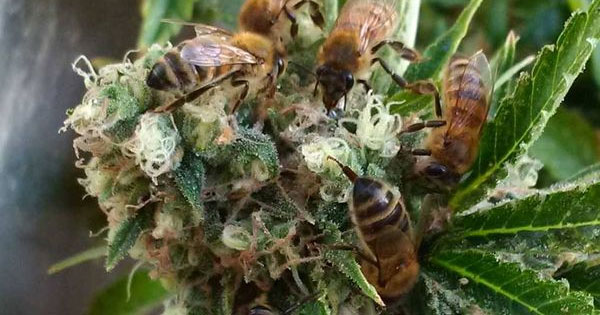
Nicolas describes his method as a “training technique to get the bees to collect the resin and use it in their hive.” By placing cannabis plants near the hives and encouraging the insects to gather the sticky trichomes, he has coaxed the bees to incorporate the resin into their honey stores. He reports that the bees will accept any cannabis variety, which, in theory, could produce a wide spectrum of flavors and aromas.
Scientific Context: Bees and Cannabinoids
Current entomological research indicates that bees lack an endocannabinoid system, the network of receptors through which THC and other cannabinoids exert effects in mammals. A review published in Insect Biochemistry and Molecular Biology (2021) confirms that honeybees do not express CB1 or CB2 receptors, suggesting that cannabinoids are unlikely to cause psychoactive effects in the insects themselves. Consequently, Nicolas notes that his bees do not become “high” during foraging.
Production and Characteristics of Cannahoney
The first batch of cannahoney was produced using a Blue Dream cannabis strain, though Nicolas emphasizes that the technique is still experimental and no peer‑reviewed studies have yet examined the transformation of cannabis resin into honey. He describes the honey as having a floral aroma, a color ranging from pale white to bright yellow, and a taste reminiscent of fresh cannabis flowers. Nicolas claims the product combines the traditional health benefits of honey with those attributed to cannabis, but he awaits laboratory analysis to confirm cannabinoid concentrations and potential psychoactivity in the final product.
Legal and Safety Considerations
Nicolas cultivates his cannabis plants in the wild and relocates them nearer to the hives to facilitate resin collection. He acknowledges the legal complexities surrounding cannabis cultivation in France and plans to move to Spain, where medical cannabis regulations are more permissive, to work with professionals who can test his honey and help scale production responsibly. Until comprehensive testing is completed, consumers should approach any cannabis‑derived food product with caution and be aware of local laws governing its sale and use.
Looking Ahead
While the concept of cannabisinfluenced honey captures public imagination, the field remains nascent. Experts in apiculture and cannabinoid science stress the need for rigorous research to understand how resin interacts with honey composition, whether any cannabinoids survive the bees’ enzymatic processes, and what, if any, effects the final products like cannahoney might have on human health. Nicolas Trainerbees continues to share updates on his journey via social media, inviting both curiosity and critical scrutiny from the scientific community.
For the original news feature that inspired this overview, see Here.