

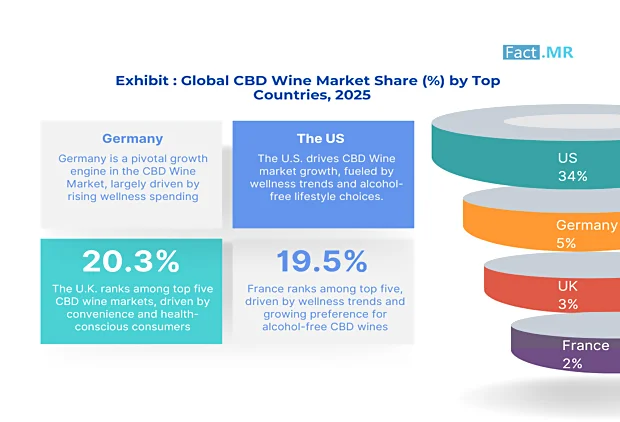
CBD wine is surging worldwide, with the United States leading a year‑over‑year growth rate of over 30% according to Fact.MR.
Retail Innovation and Wellness Integration Advance the USA Market
Consumers are embracing CBD wine as a functional, low‑alcohol alternative to traditional wine.
Growth is concentrated in states such as California, where hemp‑friendly regulations and a strong wine heritage fuel product innovation.
Retail models are shifting toward direct‑to‑consumer platforms, wellness boutiques, and upscale grocery outlets that cater to health‑focused consumers.
Brand narratives emphasizing clean labels, organic sourcing, and third‑party lab testing are resonating with health‑conscious buyers.
Technological advances in CBD infusion are improving product quality and differentiation, yet inconsistent federal regulation remains a barrier to nationwide expansion.
Urban markets show strong consumer acceptance driven by a preference for mindful consumption.
Strategic investment in distribution networks and brand credibility will determine long‑term market success.
Compliance Certainty and Premium Branding Catalyze UK Growth
The United Kingdom is benefiting from clear regulatory guidance under the Novel Foods framework, which has encouraged product development and investment.
Producers are emphasizing small‑batch production, botanical flavor profiles, and minimalist branding to attract health‑focused consumers.
High‑end wine retailers, e‑commerce platforms, and health‑focused outlets serve as key distribution channels, while trends such as Dry January continue to drive demand.
The UK CBD wine market remains niche but grows steadily, driven by transparent compliance and rising consumer trust in infused products.
Artisanal branding and clear origin labeling are becoming central to brand strategy, while digital sales and experiential marketing fill gaps left by limited mainstream retail uptake.
Heritage Integration and Early-Stage Trials Shape French Market
France’s CBD wine market remains in early stages, constrained by cautious regulatory evolution and a strong national wine identity.
Regulatory uncertainty and the country’s deep‑rooted wine culture are slowing large‑scale commercialization, though early trials are emerging.
Independent vintners are collaborating with CBD specialists to craft low‑alcohol, terroir‑driven wines that target urban, health‑focused consumers.
These early trials emphasize organic sourcing and subtle CBD infusion, highlighting a potential path toward broader market acceptance.