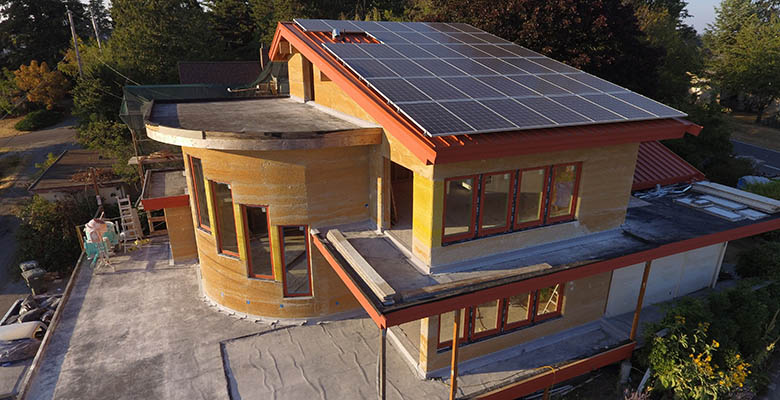
Hempcrete Emerges as Concrete’s Sustainable Alternative
Concrete dominates the built environment, yet its environmental toll fuels a push for a greener rival. A fast‑growing material is reshaping how America builds.
More than 4 billion tons of concrete are produced annually, generating roughly 8 percent of global CO₂ emissions and consuming 10 percent of industrial water withdrawals, according to a 2018 Nature Sustainability study.
Workers exposed to respirable crystalline silica dust from concrete face silicosis, lung cancer, COPD and kidney disease, OSHA reports.
Hempcrete, a bio‑composite of hemp hur, lime and water, offers a low‑carbon, non‑toxic alternative. It sequesters carbon, is biodegradable, fire‑resistant and thermoregulating, said HempStone LLC.
French architects introduced hempcrete in the 1980s; it spread across Europe, where it now underpins thousands of homes.
U.S. adoption lags because industrial hemp production remains limited. Farmers grow hemp on just 1.5 acres to build a 1,500‑square‑foot house in 12 weeks, but small‑scale cultivation restricts supply, the International Hemp Building Association notes.
THC levels in industrial hemp are only 0.035 percent, dispelling the marijuana stigma, architect Anthony Brenner explained.
Processing capacity is scarce; no large‑scale U.S. decortication facility exists, according to researchers from the University of Nebraska‑Lincoln.
Regulatory hurdles also impede progress. The U.S. Hemp Building Association works with the International Code Council and ASTM to resolve permitting and performance issues, a statement from the group said.
Cost remains high because builders often import hemp hur from Europe, increasing both price and carbon footprint.
The Push House, completed in 2010, became the first U.S. hempcrete home; today fewer than 50 U.S. homes use the material, despite new projects in Texas, Hawaii and Virginia, and firms such as American Hemp, Left Hand Hemp, HempStone LLC and Hempitecture.
Supply chain setbacks, including Sunstrand’s January bankruptcy, underscore the industry’s fragility.
If policy and infrastructure barriers are cleared, hempcrete could unlock a greener construction future for America.