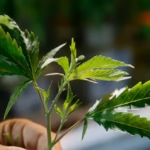


California voted to legalize medical cannabis in 1996, making it the first state to do so, and promised breakthrough health benefits that have yet to materialize after three decades.
Expert Insight
Men’s Health recruited Dr. Kevin Hill, chief of the Division of Addiction Psychiatry at Beth Israel Deaconess Medical Center, to answer pressing questions about weed and dependence.
Dr. Hill confirmed that cannabis can be addictive. He said roughly 30 to 35 percent of adult users develop cannabis use disorder, up from 10 to 30 percent five years ago, as higher‑potency products flood the market.
According to Dr. Hill, the brain pathways involved overlap with those of other substances. Cannabis triggers a dopamine surge similar to opioids, though the magnitude differs, which explains why treatments targeting common neural routes can address multiple addictions.
Genetics also play a role, Dr. Hill noted. A family history of any addiction increases the likelihood of developing a cannabis use disorder, even though the genetic link remains less defined than for substances like alcohol or nicotine.
These findings suggest that while many people use cannabis without problems, a significant and growing minority face dependence, prompting the need for clearer public‑health guidance.
Jocelyn Solis‑Moreira, associate health & fitness editor for Men’s Health, brings a background in science writing from CNN, Scientific American, Popular Science and National Geographic, and pursues circus arts in her spare time.