
TSA Clarifies Medical Cannabis Travel Guidance
The Transportation Security Administration (TSA) has revised its online guidance for travelers carrying medical cannabis, reflecting the evolving intersection of state‑level marijuana laws and federal aviation security policy. The update, posted on the TSA’s “What can I bring” page, explains how officers respond when cannabis is discovered during routine screening for weapons or explosives.
How TSA Handles Cannabis Discoveries
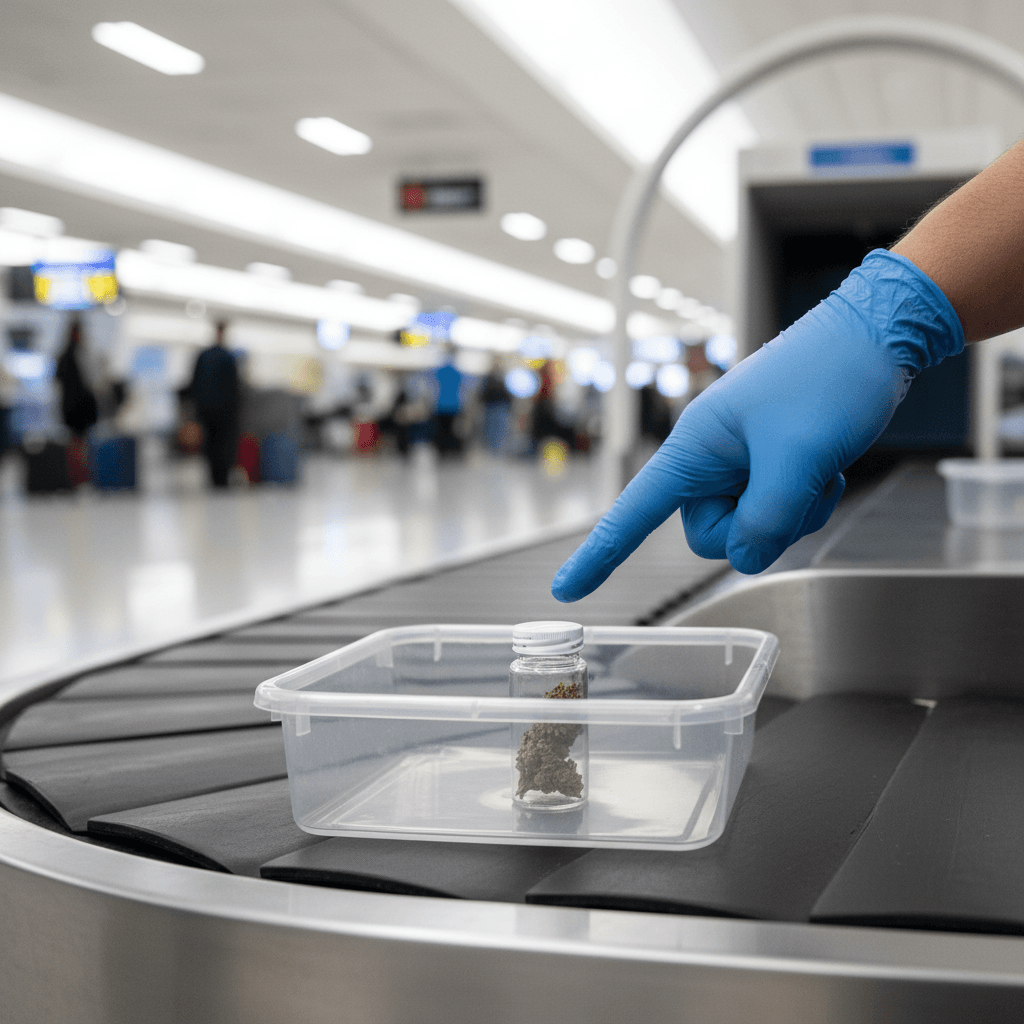
According to the revised wording, TSA officers focus their screening on items that could threaten aircraft safety. The guidance states: “TSA security officers do not search for illegal drugs, but if any illegal substance or evidence of criminal activity is discovered during security screening, TSA will refer the matter to a law‑enforcement officer.” In practice, this means that if a screener notices what appears to be cannabis in a passenger’s bag or on their person, the screening pause, airport police are notified, and the incident is handed over to local authorities.
Legal Context at the Airport
While TSA personnel lack the power to arrest or file charges, the actions taken by airport police depend on the jurisdiction where the airport is located. Federal law still classifies non‑FDA‑approved cannabis as a Schedule I substance, making possession illegal in airports and on aircraft regardless of a traveler’s medical authorization. The only federally permissible cannabis‑derived products are those approved by the FDA—such as Epidiolex, Marinol, Syndros, and Cesamet—or those obtained through tightly controlled research programs.
Recent federal actions, including the Department of Justice’s move to place certain medical cannabis preparations in a less restrictive category, have not altered the overarching prohibition on plant‑form cannabis in air travel. Consequently, patients must weigh state‑level protections against the continued federal ban when planning flights.
Impact on the Traveling Public
The updated TSA notice reaches a sizable portion of the U.S. population. A 2025 Centers for Disease Control and Prevention (CDC) survey found that roughly 52.5 million Americans—about 19 % of the population—reported using marijuana at least once in 2021. More recent data from the National Center for Drug Abuse Statistics indicate that 61.5 million adults, or 23.4 % of the U.S. adult population, used marijuana in 2024. These figures illustrate why clear, consistent guidance on cannabis and air travel matters to millions of patients and recreational users alike.
For travelers navigating this patchwork of regulations, the TSA advises checking both the airline’s policies and the specific laws of the departure and arrival jurisdictions. Carrying documentation such as a physician’s recommendation or a state‑issued medical marijuana card may assist law‑enforcement officers in understanding the context, although it does not override federal prohibitions.
Disclaimer: This article is for informational purposes only and does not constitute medical advice. Always consult a qualified healthcare practitioner before making decisions about your health or any medical condition.
Source: Here