

Virginia Hemp Farmer Seeks Federal and State Relief Ahead of Looming THC Restrictions
On a wet Wednesday morning in Caroline County, farmer and entrepreneur Graham Redfern stood on his front porch as U.S. Rep. Eugene Vindman (D‑VA) walked up the driveway. The rain was a welcome sign for the start of the planting season, but Redfern’s thoughts were already turning to a more uncertain future.
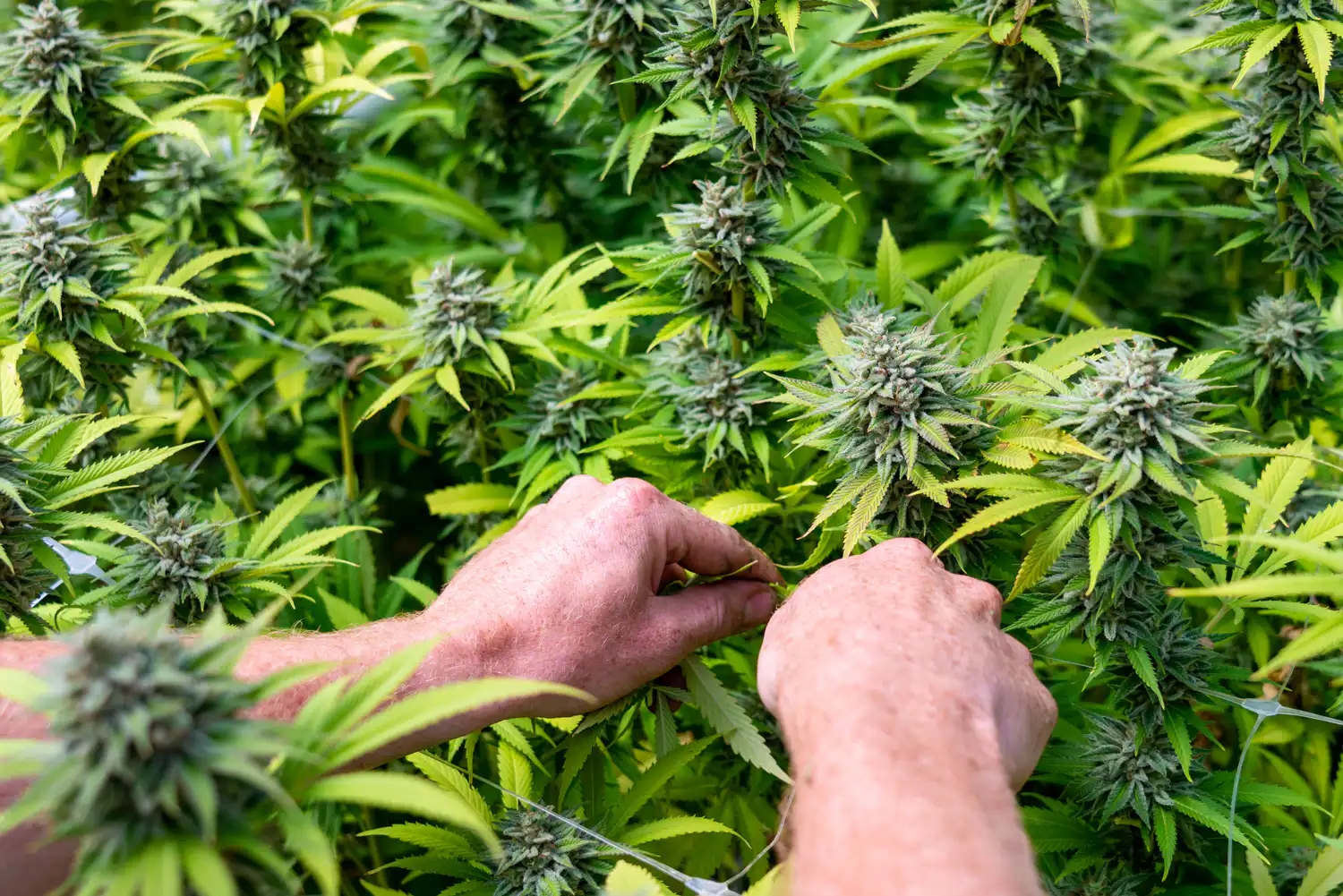
Redfern runs Redfern Hemp Co., a small business that employs 14 full‑time and five part‑time workers. The company produces body creams, dog treats, chocolates, gummies, oils, birdseed and fiber products derived from hemp. Many of these items contain tetrahydrocannabinol (THC) and cannabidiol (CBD) and are marketed for their calming and pain‑management effects.
“We needed this rain,” Redfern said, gesturing toward the fields. “But the federal crackdown on hemp THC products could make most of what we sell illegal later this year.”
Federal Farm Bill Changes Threaten Hemp‑Derived Products
The 2018 Farm Bill legalized hemp cultivation nationwide, provided that plants contained no more than 0.3 % delta‑9 THC on a dry‑weight basis. That threshold opened the door for businesses like Redfern’s to create a variety of consumer goods. In late 2023, Congress added a provision to the annual government spending bill that effectively bans most hemp‑derived products containing any detectable THC, moving the goalpost toward a total prohibition.
The U.S. House of Representatives passed its latest version of the Farm Bill in early 2024, retaining the restrictive language. The measure now awaits Senate consideration. Bipartisan attempts to amend the provision and preserve the legal hemp market did not survive the committee process.
“Cannabis, which includes hemp, will naturally produce cannabinoids as the plant matures,” Redfern explained. “If you grow the plant to full maturity, THC levels inevitably rise, pushing the product into the category that federal law now treats as marijuana.”
State‑Level Cannabis Market Uncertainty Adds to the Pressure
At the same time, Virginia lawmakers approved a framework for a retail cannabis market in 2023, half a decade after voters legalized recreational marijuana. The proposal would allow licensed businesses to sell cannabis products, but it requires that cultivation, processing and retail operations all sit within a 20‑mile radius.
Redfern’s farm is located in Caroline County, while his commercial kitchen—where products are tested and formulated—sits in Richmond, roughly 30 miles away. “I can’t sell my farm and I don’t want to build another kitchen when I already have one that works,” he said. “The current legislation gives me no realistic pathway to shift my existing model into the legal marijuana market.”
Gov. Abigail Spanberger (D) has not yet signed the bill, returning it to the General Assembly with amendments that were ultimately rejected. She now faces a choice: approve the legislature’s version or veto it outright. Redfern urged Vindman to advocate for a veto, arguing that a delay would allow further negotiations during the ongoing state budget talks, which must be resolved by July 1 when the current fiscal year expires.
Exploring Alternatives: Hemp Fibers and Potential Pivots
In anticipation of the federal restrictions, Redfern is researching ways to use hemp fibers to stabilize plastics in recycling processes, a strategy aimed at curbing micro‑plastic pollution. He is also evaluating whether transitioning to a cannabis‑focused business is feasible, pending clarification on Virginia’s eventual market rules.
Other Virginia entrepreneurs share similar concerns. Jay Bayer, owner of the Richmond‑based Bingo Beer, previously partnered with Pure Shenandoah to produce low‑dose THC seltzers. He hopes the partnership could evolve into a full‑scale marijuana product once the state market launches, viewing it as a pivot amid federal hemp uncertainty.
Congressional Outreach and Constituent Advocacy
During the farm visit, Redfern asked Rep. Vindman to push for adjustments to the upcoming Farm Bill that would preserve a legal space for hemp‑derived products containing trace amounts of THC. Vindman responded, “You’re a constituent. Let’s see what is in the realm of possibility.” He noted his office’s ongoing dialogue with Gov. Spanberger’s team and pledged to relay Redfern’s concerns about both federal and state policies.
Del. Paul Krizek (D‑Fairfax), who sponsored the House version of Virginia’s cannabis market bill, expressed frustration with the governor’s amendments but said he remains open to future revisions. “Good legislation sometimes takes time,” Krizek remarked, emphasizing the need for a workable solution that accommodates existing small businesses.
Looking Ahead
As the U.S. Senate prepares to review the Farm Bill and Virginia’s budget deadline looms, stakeholders across the hemp and cannabis sectors await clearer guidance. For farmers like Graham Redfern, the coming months will determine whether their current operations can survive, adapt, or must be reshaped entirely.
This story was first published by Virginia Mercury.
Source: Here