
Iowa Farmers Invest in Industrial Hemp Infrastructure
Farmers around Rock Valley, Iowa, are putting significant capital into industrial hemp processing and manufacturing, hoping to build a reliable local market for the crop. Steve Vonk, a grower near Rock Valley, increased his hemp planting from 100 acres last spring to 1,500 acres this year and persuaded nine neighboring farmers to add hemp to their rotations. Vonk says the main hurdle is developing a market—a classic “chicken‑and‑egg” situation where growers need buyers before they can commit to large‑scale production.
New Facilities for Hemp Processing and Building Blocks
Two new facilities anchor this market‑development effort. Vonk, together with his son Dawson Vonk and daughter Kaela Clarey, operates HempAgra, which is installing a HempTrain processing machine. The equipment is designed to extract long, clean hemp fiber suitable for textile applications, and initial samples are slated for overseas buyers.
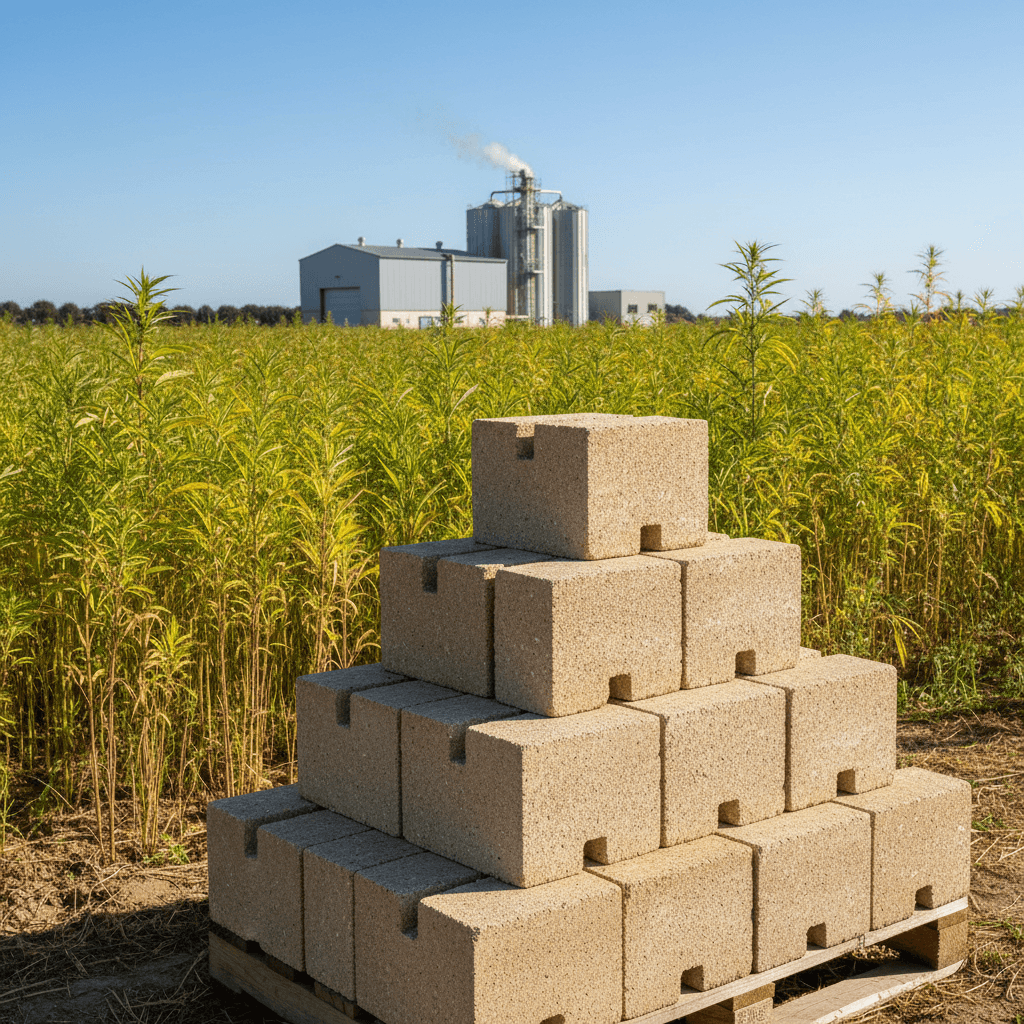
Adjacent to HempAgra, RenewaBuild Great Plains is constructing a manufacturing plant that will turn hemp hurd—the woody core of the stalk—into structural, interlocking building blocks. The blocks combine hemp hurd with lime and a polymer composite core, yielding a product roughly the size of a standard cinder block. According to the company, the blocks offer:
- Structural integrity: They can replace traditional wood or steel framing in walls.
- Insulation: The material provides inherent thermal resistance.
- Durability: They are engineered to resist fire, mold, and high winds.
RenewaBuild Great Plains licenses the technology from the Canadian firm RenewaBuild Field to Form. The Rock Valley site will be the company’s first commercial factory, with block production expected to begin in December. The plant aims to output one million blocks per year—enough to build about 600 homes—requiring roughly 2,000 to 3,000 acres of hemp hurd annually.
Expanding Hemp Acreage and Market Dynamics
The push to grow more hemp in Iowa mirrors a broader trend among farmers seeking alternatives to traditional commodity crops. Steve Vonk and John Peterson, a South Dakota farmer and president of the South Dakota Industrial Hemp Association, chose not to plant soybeans this year after observing weak commodity prices and a shrinking export market. Instead, they are focusing on corn and hemp.
Historically, Iowa’s hemp acreage has been modest. Vonk’s 1,500‑acre planting alone exceeds the state’s total harvested hemp area in 2023, which was 205 acres according to the USDA NASS National Hemp Report. Nationally, the same report shows Kentucky leading with 7,500 harvested acres, followed by Texas (3,650 acres) and California (3,700 acres). South Dakota, which topped the nation in hemp acreage in 2021 and 2022, harvested 1,020 acres in 2023, placing it 12th. Peterson anticipates a rebound to roughly 3,000 acres in South Dakota this year, driven largely by demand from the textile sector.
Local Economic Impact and Supply Chain
The Rock Valley block facility will source its hemp hurd from three regional processors within a 100‑mile radius: HempAgra (Vonk’s operation), Dakota Hemp in Wakonda, South Dakota (run by John Peterson), and Complete Hemp Processing in Winfred, South Dakota (owned by Ken Meyer, another RenewaBuild investor). The block‑making plant is projected to employ about seven workers, while HempAgra expects to add eight positions. Together, these ventures aim to create a new revenue stream for local farmers and stimulate economic activity in the surrounding communities.
Disclaimer: This article is for informational purposes only and does not constitute medical advice. Hemp Gazette does not provide medical recommendations, diagnoses, or treatment plans. Always consult a qualified healthcare practitioner before making any decisions regarding your health or any medical condition. Statements concerning the therapeutic uses of hemp, cannabis, or cannabinoid‑derived products have not been evaluated by Australia’s Therapeutic Goods Administration (TGA). Medicinal cannabis products in Australia are accessed via prescription pathways under TGA regulation.
For more details on the original story, see the source Here.