

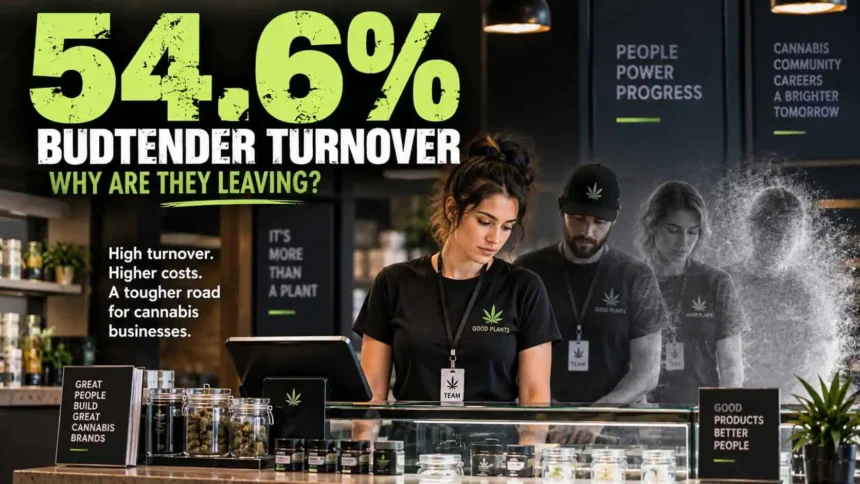
Cannabis retailers are losing more than half of their budtenders each year, a turnover crisis that threatens profitability and customer service; Headset research shows a 54.6% annual attrition rate and 23% of new hires quit before finishing their first month.
Michigan’s Hourly Worker Turnover Rate: 25.1%
The American Society of Employers surveyed 204 Michigan firms in 2025 and recorded a 25.1% voluntary turnover rate for hourly staff, the highest among employee categories measured.
57% of those employers cited better salary or compensation as the main reason workers left, while 63% said they had reviewed pay or benefits in the prior year to curb attrition.
Turnover by the Numbers
54.6% of U.S. budtenders left their dispensary during the 12‑month period studied.
23% of newly hired budtenders failed to finish their first full month.
Over 30% of dispensaries reported turnover rates exceeding 60%.
Why Retention Matters
High turnover forces retailers to constantly recruit, interview, onboard, and train staff, draining time and money while eroding product knowledge and customer relationships.
The Headset and ASE studies use different methods, but both highlight a retention crisis that outpaces typical industry turnover.
WOW Supplemental Wellness Program
William “Bill” Shaw’s WOW program offers a supplemental wellness benefit that adds healthcare and preventive services without raising wages.
It leverages the federal tax code to make eligible benefits pre‑tax, potentially boosting employee take-home pay while lowering employer payroll tax liability.
Participating workers gain access to routine medical care, wellness services, and improved compensation packages that can sway job decisions.
1. WOW Adds a Supplemental Employee Wellness Benefit
WOW is not a wage hike; it supplements existing pay with healthcare and wellness services.
2. Employees Gain Access To Healthcare And Wellness Services
Staff can receive preventive and routine medical care through the program, creating a differentiator in a competitive hiring market.
3. The Program Can Affect Employee Take-Home Pay
When structured correctly, eligible benefits reduce taxable wages, increasing net pay without a corresponding wage increase.
4. Employers Can Potentially Reduce Payroll Taxes
Pre‑tax benefit structures lower the wages subject to FICA taxes, offsetting part of the employer’s cost.
5. WOW Gives Cannabis Employers Another Way To Compete For Workers
Rising wages are unsustainable in a price‑driven market, so a benefits package that improves total compensation can attract and retain talent without inflating payroll.
6. Benefits Could Become A Retention Tool
Half of budtenders leave within a year; added benefits give workers a compelling reason to stay beyond a modest wage differential.
7. Lower Turnover Can Produce Savings Beyond Payroll Taxes
Replacing an employee incurs recruiting, training, and management costs, plus the loss of regulatory expertise and customer relationships unique to cannabis operations.
Shaw Also Offers Cannabis Business Financing
Shaw partners with private‑capital sources to fund equipment purchases, working capital, acquisitions, bridge loans, and other financing needs for qualified cannabis firms.
- Equipment financing
- Working capital
- Acquisition financing
- Bridge loans
- Private capital funding
Why Michigan And Ohio Operators Should Pay Attention
With turnover rates above 50% and compensation cited as a top driver of exits, cannabis businesses must view benefits as a strategic retention tool rather than a pure expense.
If a program can lower turnover, increase take‑home pay, and reduce payroll taxes, it transforms from an HR cost into a profit‑center.