

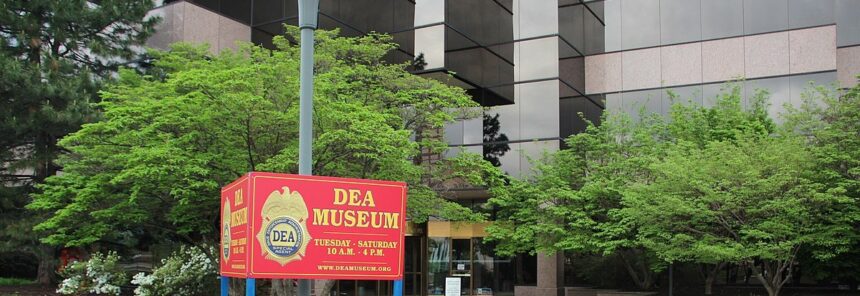
The DEA just opened a new registration window for medical cannabis businesses, giving firms a 60‑day deadline to sign up under its Schedule III plan.
According to the Cannabis Business Times, interested companies must complete the application within two months of the agency’s October 5 launch.
The DEA’s Medical Cannabis Registration Process
The agency’s Diversion Control Division now accepts Form 225 for state‑licensed manufacturers, distributors and analytical laboratories to handle cannabis as a Schedule III substance under the Controlled Substances Act.
Eligible entities include producers that cultivate, process, package and transfer product, distributors that receive and move product, and labs that test product for quality and safety.
Federal Registration Details
Registration applies to each physical location where cannabis is stored, used or dispensed, not to the individual or the institution as a whole.
The DEA sets the application fee, which varies by business type, and processing times depend on overall application volume.
Regulators may deny, restrict or revoke a registration for public‑interest concerns, compliance lapses or record‑keeping failures as outlined in the CSA and 21 CFR 1301.36.
Form 225 serves both to obtain initial authorization and to keep that authorization current through required renewals.
Registered labs must maintain a continuous inventory record under 21 CFR 1304.11, a separate obligation from the registration itself.
Federal Medical Cannabis Company Registration
The Form 225 application consists of six sections covering personal/business information, business activity and schedule, state licensing, background details, payment and final confirmation.
Fee amounts are $3,699 for manufacturers, $1,850 for distributors and $296 for analytical labs; the fees are nonrefundable and valid for one year.
Applicants can be institutions filing for a facility that supports multiple research groups or individuals registering for a specific program under their own name.
Registration Revocation, Denial or Restriction
The DEA may limit revocation or suspension to the specific controlled substance at issue, per 21 CFR 1301.36, based on public‑interest, licensure problems, prior compliance history or record‑keeping deficiencies.