
Washington Farmer Becomes First State Hemp Grower Under New Rules
MOSES LAKE, Wash. — A Grant County farmer has planted 75 irrigated acres of hemp, becoming the first Washington grower to try a crop that remains a federally controlled substance but can be cultivated under state supervision.
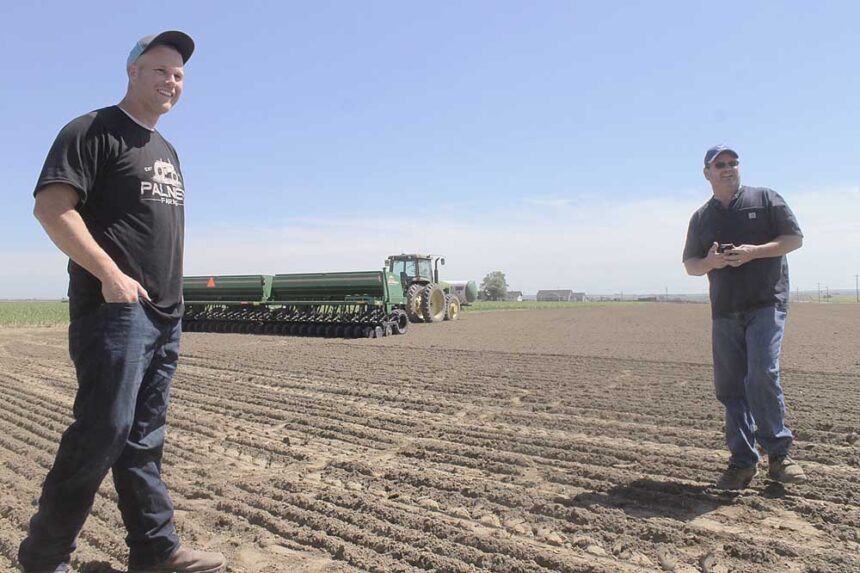
Shane Palmer, whose family farms about 3,000 acres near Moses Lake, planted 70 acres on Friday and added five acres on Tuesday while about two dozen prospective hemp farmers observed.
Palmer said, “I like to get my feet wet with new things. It’s something to experiment with.”
The planting marks another step in returning hemp to U.S. agriculture after the 2014 Farm Bill authorized state‑licensed cultivation provided growers receive state agriculture department supervision.
State Senate Agriculture Committee Chairwoman Judy Warnick, R‑Moses Lake, watched Tuesday’s planting in her district and said she had once been skeptical because of hemp’s link to marijuana, both being cannabis plants under federal law.
Warnick added, “The more I hear about it, the less skeptical I am. I’m optimistic this can become another crop for our farmers here. We have the best ground in the state.”
Hemp fields must stay at least four miles from marijuana farms to prevent cross‑pollination and undergo periodic testing by the Washington Department of Agriculture to ensure THC levels remain low.
WSDA has issued hemp licenses to Palmer and the Confederated Tribes of the Colville Reservation, and to Cory Sharp of HempLogic for seed distribution, while five additional applications remain pending, according to hemp coordinator Emily Febles.
Tuesday’s planting beside a corn field highlighted a day‑long workshop on growing and processing hemp; Palmer’s operation already produces corn, peas, bluegrass seed, hay and buckwheat, and he hopes hemp will add a profitable rotation option.
He expects to harvest waist‑ to chest‑high hemp by the end of September.
Market uncertainty surrounds the crop; hemp seeds can be eaten raw or used as an ingredient, while fiber can serve textiles and building materials, but WSDA rules require any Washington‑grown hemp to be processed in‑state.
Processing fiber demands more capital investment than selling hemp as grain, Sharp noted, and the lack of a committed buyer keeps risk high until a contract is signed.
Sharp described the seed import process as emotional, explaining that a single paperwork error at the border can block the shipment, underscoring the challenges of bringing a federally controlled substance into the state.