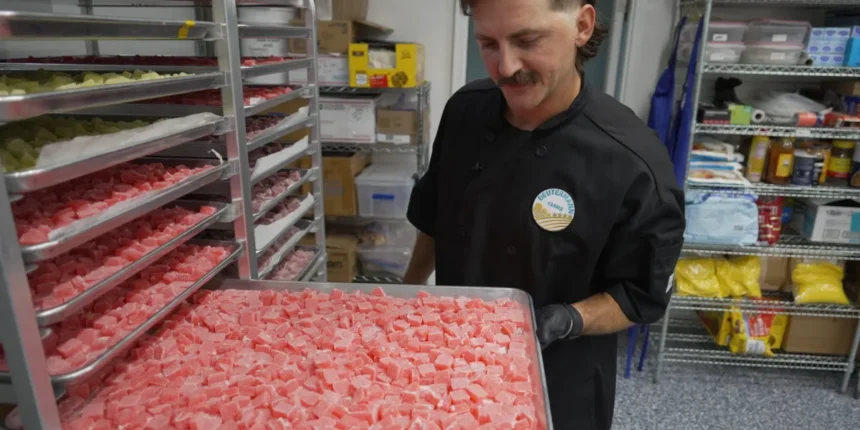
A $28 billion hemp‑THC market faces an abrupt shutdown as Congress moves to close the loophole that let unregulated cannabis edibles flood the United States, threatening jobs and state tax revenue.
Congress Closes Loophole
The Senate voted to insert a hemp THC ban into a spending bill that ended the longest government shutdown in history, setting a Dec. 11 effective date for a 0.4 mg THC limit per container, a year after the rule takes effect.
Sen. Mitch McConnell, the Kentucky Republican who championed the 2018 farm bill that legalized industrial hemp, inserted the ban to curb products that exceed the 0.3% delta‑9 THC threshold.
Industry Protests
Whitney Economics estimates the ban will cut retail revenues by $28.3 billion, eliminate 225,000 jobs and shrink state sales‑tax collections by $2.1 billion.
Industry leaders have proposed restricting sales to adults 21 and older, capping THC at 5 mg per package and banning imported cannabis compounds to preserve the market.
“If it goes through in December, this place is toast — it’s gone,” said Kentucky’s Cornbread Hemp co‑founder Eric Zipperle, whose company employs 105 people and projects $65 million in sales this year.
“The 0.4‑mg cap would also ban non‑impairing CBD lotions,” warned Jonathan Miller, general counsel of the U.S. Hemp Roundtable.
Entrepreneurs Brace for Losses
Nicholas Hohns, who runs Deutermann Farms in Clayton, N.C., entered the hemp THC business after losing his personal‑trainer job during the pandemic, and now fears a sudden exit.
“When I started seeing THC edibles being sold, I knew I had 18 months to two years to make money before the government shut us down,” Hohns said.
He has kept capital investments minimal and is exploring alternatives such as creatine gummies if the ban proceeds.
In Wisconsin, Drinkin’ Buds co‑founder Matt Swanson removed himself from payroll on Thursday, citing “just so much uncertainty” and actively seeking new employment.
Allies and Opponents Line Up
Alcohol retailers, including Total Wine & More, have backed the hemp industry, noting that cannabis seltzers have offset declining alcohol sales.
Opponents warn of public‑health risks; Smart Approaches to Marijuana CEO Kevin Sabet said, “I have sympathy for people losing their jobs, but I also have sympathy for the many more whose lives are affected by this.”
Regulated legal‑marijuana operators view hemp THC as unfair competition and support the ban; lobbyist Cory Harris argued that dire revenue predictions are overstated and that states could adopt legal hemp programs.
“If you go from virtually no rules to an awful lot of rules, that’s a buzzkill,” Harris said. “Welcome to our world. But if you establish your whole business within a legally questionable loophole, that’s just sort of the risk you take.”