

A looming ban on hemp‑derived THC threatens to erase a multibillion‑dollar industry and put thousands of jobs on the line. Congress voted to close the federal loophole that let these products flourish.
Sen. Mitch McConnell closed a loophole in the hemp law he championed
McConnell inserted a hemp THC ban into a spending bill that ended the longest government shutdown, setting the effective date for Dec. 11 after a one‑year delay.
The rule caps THC at 0.4 mg per container, well under the 0.3 % delta‑9 limit that lets drinks, gummies and vape oils stay legal.
That loophole let manufacturers load more than enough THC to intoxicate while staying under the weight‑based limit, flooding gas stations and convenience stores with unregulated, untested products.
The products have been sold openly, often to minors.
States responded by banning or regulating impairing hemp items, and the industry scrambled to stay afloat. Many businesses now face an uncertain future.
An industry tries to save itself
Whitney Economics warns the ban could slash retail revenues by $28.3 billion, eliminate 225,000 jobs and cut state sales‑tax receipts by $2.1 billion.
The report quantifies the economic fallout of a full ban.
Industry leaders propose limiting sales to adults 21+, capping THC per package and banning imported cannabis compounds.
They argue these steps would bring the market into a regulated framework.
“If the 0.4 mg cap takes effect in December, Cornbread Hemp is toast – it’s gone,” said Zipperle, who employs 105 people and expects $65 million in sales this year.
He warns the limit would cripple the company’s entire product line.
The 0.4 mg limit would also ban non‑impairing CBD items such as topical lotions, warned Jonathan Miller, general counsel of the U.S. Hemp Roundtable.
Even low‑dose CBD products could disappear from shelves.
Some consider other work
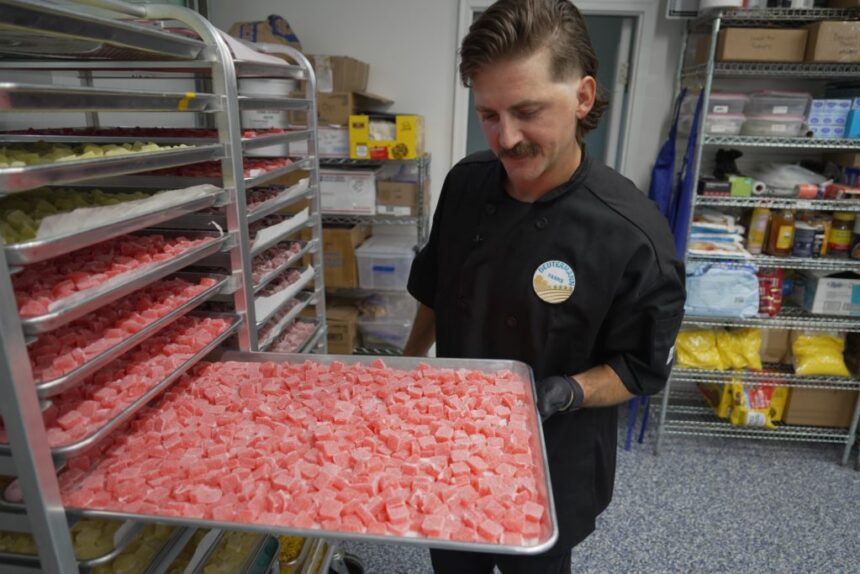
Nicholas Hohns, who runs Deutermann Farms in Clayton, NC, entered hemp after losing his personal‑training job during COVID‑19.
He entered the market because he saw a fast‑growing niche for potent THC edibles.
He says he has two years to cash in before the government shuts the loophole and is already eyeing creatine gummies as an alternative.
If the ban proceeds, he plans to pivot to non‑THC supplements.
Drinkin’ Buds, a Wisconsin cannabis‑beverage firm, has halted production and its co‑founder Matt Swanson removed himself from payroll on Thursday.
Swanson says the business can’t survive the regulatory uncertainty.
Swanson admits the uncertainty is overwhelming and says he is actively looking for a new job.
He hopes to transition into a stable employment sector.
Allies and opponents line up
Alcohol retailers such as Total Wine & More say cannabis seltzers are cushioning falling alcohol sales.
They view the emerging THC drinks as a new revenue stream.
Opponents warn the products endanger public health.
They argue the lack of regulation creates safety risks.
“I have sympathy for people losing their jobs, but I also have sympathy for the many, many more people whose lives are affected by this,” said Kevin Sabet, CEO of Smart Approaches to Marijuana.
Sabet says the societal costs outweigh any personal hardship.
The regulated legal‑marijuana industry, which sees hemp THC as unfair competition, backs the ban, arguing the projected damage is overstated.
They claim the market would shift into legal channels without harming consumers.
“If you go from having virtually no rules to suddenly having an awful lot of rules, that’s a buzzkill. Welcome to our world. But if you built your business on a legally questionable loophole, that’s the risk you took,” said Cory Harris, a lobbyist for state‑legal cannabis operators.