
Canopy Growth Plans to Launch Cannabis‑Infused Beverages in U.S. Markets
Dive Brief
- Canopy Growth will be launching cannabis‑infused beverages in legal use markets in California and Illinois through its partnership with Acreage Holdings, the companies announced on Thursday.
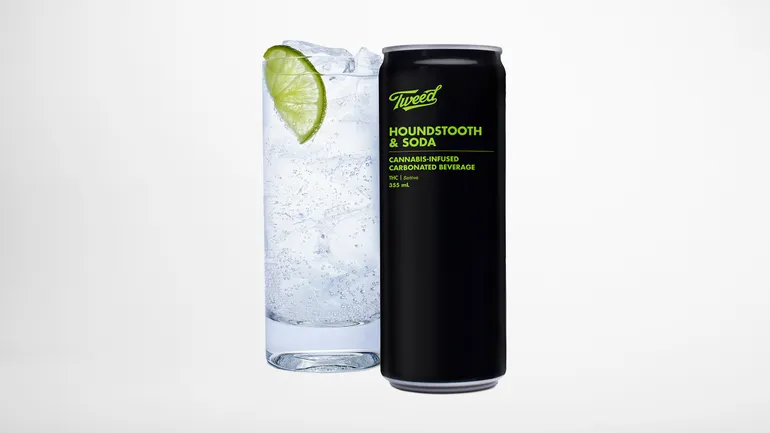
- In Canada, where cannabis beverages are legal, Canopy Growth has sold more than 1.7 million cans of drinks including Tweed’s Houndstooth & Soda and Bakerstreet & Ginger. It holds a 74 % market share and owns five of the top six SKUs in the category, the company said.
- Cannabis‑infused beverages have long been viewed as the next big growth area, especially as alcohol consumption wanes, but legal gray‑areas have slowed U.S. introduction. Alcohol giant Constellation Brands owns a 39 % stake in Canopy Growth and has invested roughly $4 billion in the business.
Dive Insight
Since Constellation Brands first took a stake in Canopy Growth back in 2017, industry observers have repeatedly asked when cannabis‑infused drinks would appear on U.S. shelves. The recent announcement answers that question, pointing to a 2021 rollout in California and Illinois.
The partnership with Acreage Holdings is designed to give Canopy a clear pathway to market. Acreage already operates a network of dispensaries and holds several cannabis brands, and it has been licensed the rights to Canopy’s U.S. beverage line. This arrangement helps navigate the patchwork of state‑level regulations that currently limit where THC‑containing drinks can be sold.
Canopy’s Canadian experience offers a template for the U.S. launch. Its Tweed beverage line, which contains just 2 mg of THC per can, has become the country’s best‑selling cannabis drink. In the last 26 weeks, Tweed ranked as the No. 1 brand in Canada, and consumer research indicates that seven out of ten purchasers would buy it again. By contrast, many existing U.S. THC‑infused beverages are high‑dose products aimed at experienced users, often exceeding 50 mg of THC per serving.
Canopy intends to offer a “sessionable infused beverage” that mirrors typical alcohol serving sizes—lower THC content, approachable flavor profiles, and packaging similar to conventional sodas or sparkling waters. This strategy aligns with broader consumer trends: a NielsenIQ report from 2020 noted that 42 % of U.S. adults are interested in lower‑alcohol alternatives, a segment that cannabis beverages could capture if regulators permit.
The expertise of Constellation Brands is also a critical asset. After a period of financial strain—Canopy reported a roughly $31 million loss in its most recent quarter—Constellation refreshed the company’s C‑suite. Former Constellation CFO David Klein stepped into the CEO role after the departure of co‑founder Bruce Linton, while Mike Lee, another ex‑Constellation finance executive, became CFO. Chris Edwards, Canopy’s Chief Insights Officer, also came from Constellation. This leadership team helped accelerate the Canadian beverage launch, and they are expected to bring the same operational rigor to the U.S. effort.
Regulatory momentum is building. Voters in Arizona, New Jersey, South Dakota, and Montana will decide in November 2020 whether to legalize recreational cannabis, potentially expanding the addressable market for infused drinks. Even if those measures fail, the existing medical‑cannabis programs in many states already allow low‑dose THC products, providing an early foothold for Canopy’s offerings.
While challenges remain—including varying local laws, taxation, and lingering stigma—the combination of Canopy’s proven product formula, Acreage’s distribution network, and Constellation’s beverage‑industry know‑how positions the company to be a early mover in what many analysts predict could become a multi‑billion‑dollar segment.
For the original press release and additional details, see the source: Here