
Federal Spending Bill Threatens Indiana’s Hemp and CBD Industry
What the new THC limit means for producers, consumers, and jobs
The recent legislation that ended the longest federal government shutdown includes a provision that would tighten the legal definition of hemp. Lawmakers changed the allowable THC content from 0.3 % delta‑9‑THC to 0.3 % total THC, a shift that could render many existing hemp products non‑compliant.
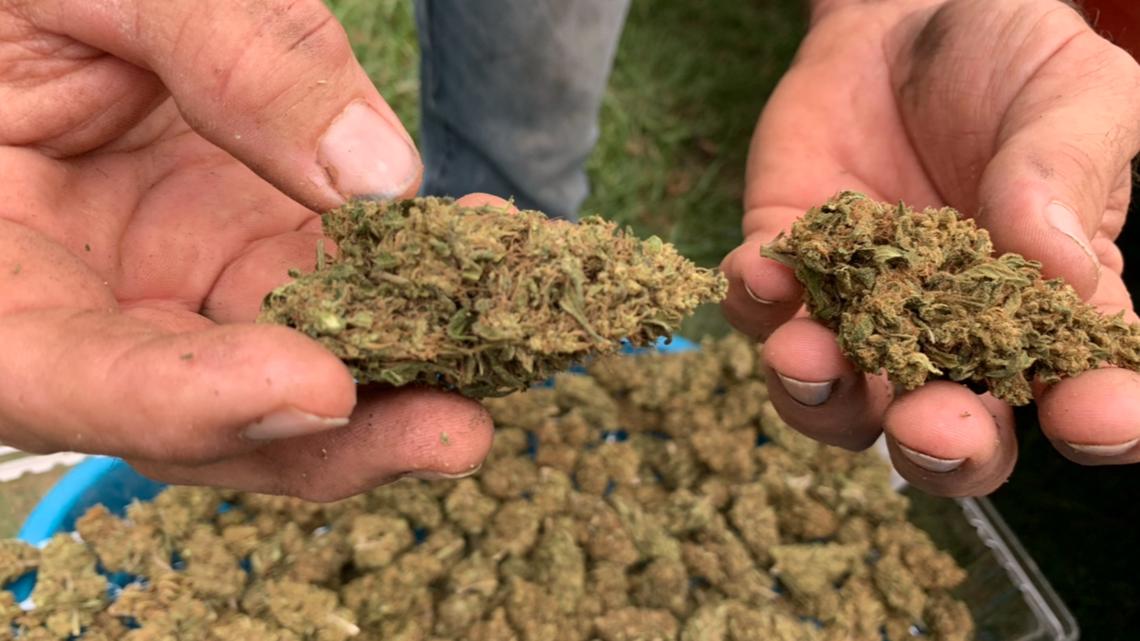
Under the 2018 Farm Bill, hemp is defined as cannabis plants containing no more than 0.3 % delta‑9‑THC on a dry weight basis. This definition allowed a wide range of products—CBD oils, delta‑8 and delta‑10 formulations, and low‑potency beverages—to stay within federal limits while still offering trace amounts of other THC compounds.
Indiana entrepreneur Adam Kline, president of Heartland Harvest, says his company built a CBD seltzer business on that framework. After leaving a legal career, Kline invested more than $6 million to convert his family’s farm in northern Indiana to hemp cultivation. Today, Heartland Harvest employs 18 people and distributes its Floral CBD beverages in 13 states.
Kline warns that the new total‑THC cap would effectively ban his products because they contain measurable levels of THCA, delta‑8, or delta‑10 in addition to delta‑9‑THC. “What we’re doing today and what we’ve done for the past six years would be re‑criminalized,” he told local news outlet WTHR.
Industry analysts note that most full‑spectrum hemp extracts naturally contain a mix of cannabinoids. When the total THC of all forms is measured, many products that currently test below 0.3 % delta‑9‑THC exceed the 0.3 % total‑THC threshold. The change would therefore pull a significant portion of the market—estimated to include thousands of SKUs—out of legal commerce.
The economic impact could be substantial. Justin Swanson, president of the Midwest Hemp Council, cites USDA data indicating that hemp‑related farming, processing, and retail support roughly 350,000 jobs nationwide. He argues that the blanket restriction risks erasing those positions and pushing consumers toward unregulated sources.
Supporters of the amendment, including Sen. Mitch McConnell (R‑KY), contend that the 2018 Farm Bill created a loophole allowing highly intoxicating hemp‑derived products to slip through with minimal oversight. They say tightening the THC definition is necessary to protect public health and prevent the sale of potent cannabis‑like items under the guise of hemp.
Swanson and other industry advocates counter that the hemp sector has long sought sensible regulations—testing standards, labeling requirements, and age restrictions—rather than a sweeping ban. “We’re at the table. We want regulations. We just need someone to work with,” Swanson said, noting that the Midwest Hemp Council has spent seven legislative sessions pushing for such rules in Indiana.
Although the Indiana General Assembly has repeatedly passed hemp‑friendly measures in the House, Senate opposition has stalled final approval. In 2025 both chambers agreed on a regulatory framework but could not settle on a maximum THC limit, leaving the state without cohesive rules.
The new federal limit is slated to take effect on November 12, 2026, one year after President Donald Trump signed the funding bill into law. That window offers stakeholders a chance to lobby for a reversal or to seek clarification from regulators.
Kline remains determined to keep his business alive, emphasizing the livelihoods tied to his operation. “We’ve got work ahead of us,” he said. “We’re not giving up, but it did put us on our heels. We’ve got employees and their families who rely on this business existing.”
If the restriction stands, Swanson predicts that consumers may travel to neighboring states with more permissive cannabis laws or turn to illicit markets, a pattern observed when previous bans were imposed on other substances.
Source: Here