

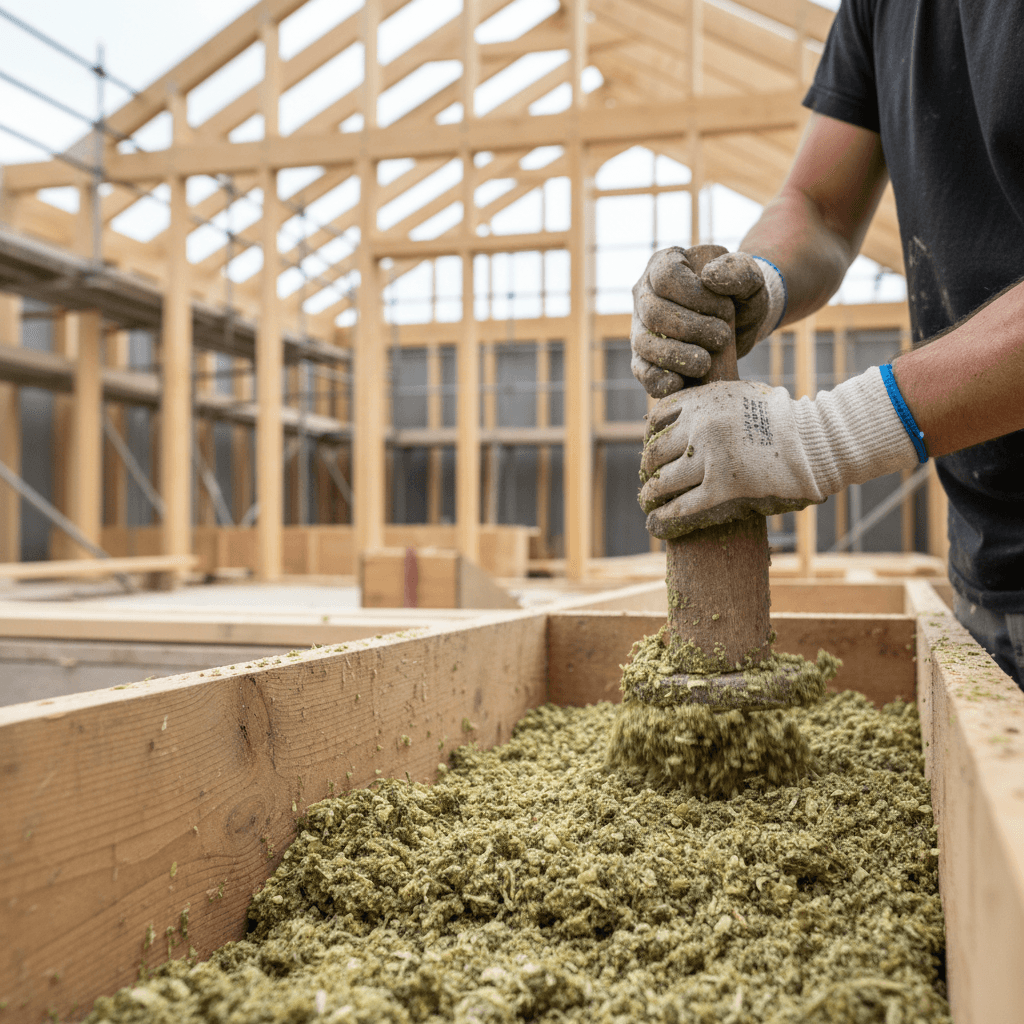
International Code Council Approves Hemp‑Lime for 2024 Residential Code
The International Code Council (ICC) has formally adopted hemp‑lime construction into the 2024 International Residential Code (IRC). This decision permits builders across many U.S. states to incorporate industrial hemp‑based wall systems without seeking individual engineering variances, removing a longstanding regulatory hurdle.
The move follows a multi‑year advocacy campaign led by the US Hemp Building Association, which submitted laboratory test results, performance data, and draft code language to the ICC’s code development committees. By anchoring the proposal in the 2018 Farm Bill’s federal distinction between industrial hemp and marijuana, the association demonstrated that the material meets safety and durability standards required for residential use.
How the Code Change Works
Prior to the update, contractors who wanted to use hemp‑lime (often called hempcrete) had to request project‑specific variances or rely on alternative compliance paths, a process that added time, cost, and uncertainty. The IRC now includes an annex that prescribes:
- Approved blending ratios of hemp hurd to hydrated lime (typically 1:1.5 by volume).
- Minimum and maximum wall thicknesses for non‑structural infill panels.
- Curing and protection requirements to ensure adequate carbonation of the lime binder.
By following these prescriptive parameters, builders can proceed with standard permitting procedures, streamlining adoption for both new construction and retrofit projects.
Performance Characteristics of Hemp‑Lime
Hemp‑lime combines the porous woody core of the hemp stalk (the hurd) with a lime‑based binder. When mixed with water, the lime initiates a pozzolanic reaction that coats the hurd particles; over weeks to months, the binder reacts with atmospheric CO₂, gradually turning into calcium carbonate stone.
- Thermal insulation: Laboratory testing shows hemp‑lime walls can achieve R‑values up to R‑30 per 10 cm thickness—roughly 10‑15 times higher than conventional concrete of the same density.
- Moisture buffering: The open‑pore structure absorbs water vapor during high humidity and releases it when conditions dry, helping stabilise indoor relative humidity and reducing condensation risk.
- Mold and pest resistance: The high pH (≈12‑13) of the lime matrix creates an inhospitable environment for fungal spores and many insects.
Environmental assessments indicate that the carbon sequestered during hemp growth often outweighs the embodied emissions from harvesting, processing, and transport, giving the finished material a potentially carbon‑negative profile.
Supply Chain and Implementation Considerations
While the code change clears the regulatory path, practical deployment still hinges on regional processing infrastructure. Decortication—the mechanical separation of hurd from bast fiber—requires specialised equipment that remains limited in many parts of North America. Consequently, some projects currently rely on hurd shipped from established European facilities, adding to logistics costs.
Investment is growing in domestic decortication hubs, particularly in the Midwest and Southeast, where state‑level incentives encourage hemp cultivation. As these facilities scale, the price and availability of hemp‑lime are expected to improve, making the material more competitive with conventional insulation products.
Builders are also experimenting with prefabricated hemp‑lime blocks and spray‑applied systems to reduce on‑site labour. Early field trials report installation times cut by 30‑40 % compared with traditional hand‑tamped formwork, while maintaining equivalent thermal and moisture performance.
Conclusion
The ICC’s approval of hemp‑lime for the 2024 IRC marks a tangible step toward wider acceptance of bio‑based building materials in mainstream residential construction. By aligning code language with verified performance data, the update addresses both safety concerns and the industry’s demand for sustainable alternatives. Continued investment in regional processing capacity and further research into long‑term durability will be key to realizing the full environmental and economic benefits of hemp‑lime construction.
Disclaimer: This article is for informational purposes only and does not constitute medical advice. Hemp Gazette does not provide medical recommendations, diagnoses, or treatment plans. Always consult a qualified healthcare practitioner before making any decisions regarding your health or any medical condition. Statements concerning the therapeutic uses of hemp, cannabis, or cannabinoid‑derived products have not been evaluated by Australia’s Therapeutic Goods Administration (TGA). Medicinal cannabis products in Australia are accessed via prescription pathways under TGA regulation.
Source: Here