

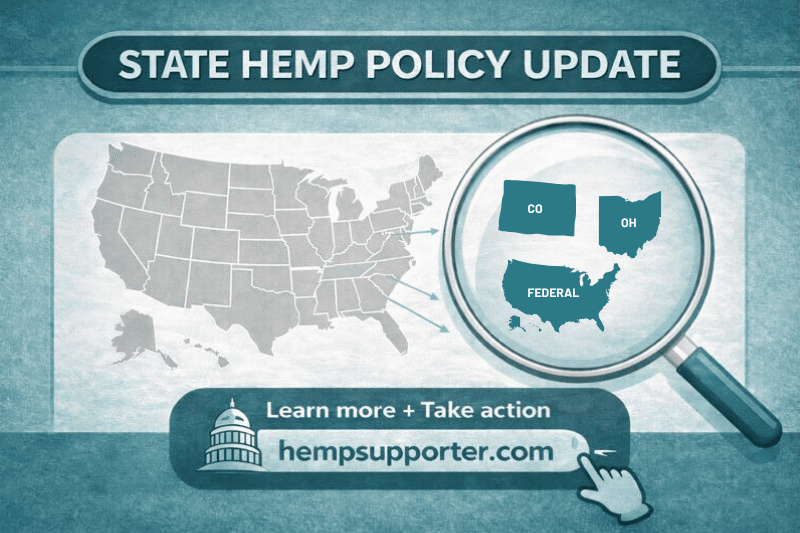
Colorado: Monitoring SB26‑164 for Hemp‑Derived THC Beverages
Colorado lawmakers have introduced SB26‑164, a bill designed to create a clear regulatory framework for hemp‑derived THC beverages. The legislation would define a “lawful THC beverage” as a non‑alcoholic product made from hemp that contains up to 10 milligrams of THC per serving. If passed, the bill would allow these drinks to be sold in traditional retail stores, restaurants, and hospitality venues under state‑run licensing and testing requirements.
Supporters argue that the measure responds to shifting federal policy that threatens to impose overly restrictive limits on hemp products nationwide. By establishing a model that balances consumer safety with market access, Colorado aims to demonstrate to Congress that sensible, enforceable standards can replace a blanket prohibition approach. At this stage, the bill is under review in the Senate Agriculture Committee, and stakeholders are actively engaging with legislators to shape the final language.
No immediate action is required from advocates, but the Hemp Supporter team will continue to monitor the bill’s progress and provide updates as they become available.
Ohio: Ongoing Legal Challenges to SB 56
In Ohio, SB 56 has generated considerable controversy by imposing sweeping restrictions on hemp‑derived products, effectively banning most consumable items and limiting THC beverages. Since its enactment, the law has faced multiple legal challenges. A Sandusky County court previously issued a temporary injunction blocking local enforcement, and more recently a Franklin County judge granted a separate temporary restraining order that permits two specific retailers—Happy Harvest and Get Wright Lounge—to continue operating despite the ban.
The Franklin County ruling centered on claims that SB 56 was improperly enacted and unlawfully interferes with interstate commerce. While the decisions apply only to the named businesses, they signal growing judicial scrutiny of the statute and underscore the uncertainty facing Ohio’s hemp sector. Industry groups caution that, without a legislative fix or a broader court reversal, many compliant businesses could be forced to cease operations.
At present, no additional advocacy steps are requested; the situation remains under close watch.
Federal: The Hemp Safety Enforcement Act (S.4315)
On the federal front, Senators Rand Paul, Amy Klobuchar, and Joni Ernst have introduced S.4315, the “Hemp Safety Enforcement Act.” The bill responds to a controversial provision inserted into the November 2025 government funding deal that redefines lawful hemp in a way that would cap total THC at 0.4 milligrams per container—a limit projected to eliminate 90‑95 % of current hemp‑derived products and potentially reclassify them as Schedule I substances by November 2026.
S.4315 offers states and tribal governments an opt‑out mechanism. Jurisdictions that choose to opt out would be allowed to regulate hemp cannabinoids under their own frameworks, provided they adopt baseline safeguards such as minimum‑age purchase requirements and prohibitions on unsafe synthetic cannabinoids. Participating states could continue to produce, sell, and ship hemp products across state lines without fear of federal pre‑emption.
Policy analysts note that the bipartisan sponsorship of the bill reflects a growing recognition that a one‑size‑fits‑all federal approach is ill‑suited to a rapidly evolving market. By preserving state‑level flexibility while enforcing basic safety standards, S.4315 aims to prevent market collapse and support responsible industry growth.
Readers interested in tracking the bill’s progress can follow updates through Congress.gov or the Hemp Supporter policy tracker.
How You Can Help
Whether you are a business owner, consumer, or advocate, your voice matters in shaping hemp policy. Use our State Action Center to contact lawmakers in Colorado, Ohio, and your own state, urging them to support sensible regulations like SB26‑164, oppose overly restrictive measures such as SB 56, and back federal solutions like the Hemp Safety Enforcement Act.
Staying informed and taking timely action helps ensure that hemp remains a safe, accessible, and economically viable option for communities nationwide.
For the full original update, visit: Here