
State Hemp Policy Update: Key Legislative Developments in Six States
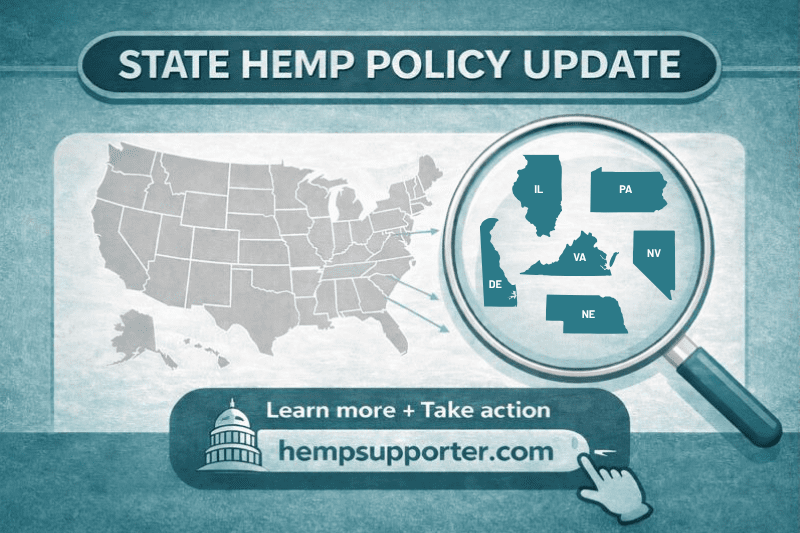
As state legislatures continue to shape the future of hemp-derived products, several states have advanced bills or regulations that could significantly affect market access, product standards, and business operations. The following summary outlines the current status of notable proposals in Delaware, Illinois, Nebraska, Nevada, Pennsylvania (Philadelphia), and Virginia, highlighting where stakeholder engagement is most urgent.
Delaware: Opposing HB 373 and HB 395
Delaware lawmakers have advanced two bills that would impose restrictive new rules on hemp products. HB 373 creates a licensing and taxation framework for THC‑infused beverages, limiting sales to package stores and marijuana retailers while adding fees and testing requirements. Although the bill permits up to 10 mg of Delta‑9 THC per container, its retail restrictions could curb broader consumer access.
HB 395 takes a more prohibitive approach, defining any product containing more than 0.4 mg of total THC per container as marijuana‑derived. The legislation also introduces a ban on “counterfeit THC ingredients,” effectively targeting many synthesized cannabinoids. If enacted, HB 395 would eliminate an estimated 95 % of the state’s existing hemp marketplace.
Delaware residents are urged to contact their state senators and request a NO vote on both bills before the legislative session adjourns on June 30, 2026.
Illinois: Correction on SB 3222
An earlier update referenced different bill numbers; the final vehicle for hemp restrictions in Illinois is SB 3222, which Governor JB Pritzker signed into law on June 12, 2026. The legislation replaces the Industrial Hemp Act with the Illinois Hemp Act, effective November 12, 2026.
Key provisions include a strict 0.4 mg total THC per container cap, a provision that would disqualify roughly 95 % of current hemp products from lawful hemp status, and new registration and compliance requirements for manufacturers and retailers. The law also shifts enforcement authority to the state’s cannabis regulatory body and creates a transition path for existing hemp businesses to enter the licensed cannabis market, with 45 infuser licenses reserved for social‑equity applicants starting January 2027.
Because the bill has already been signed, further legislative action is not required; however, stakeholders should monitor the implementation timeline and any forthcoming guidance from state agencies.
Nebraska: Monitoring Proposed Food‑Product Rules
The Nebraska Department of Agriculture held a rulemaking hearing on June 18, 2026, regarding proposed “Adulterated Food Product Regulations” under the Nebraska Pure Food Act. The draft rule would classify any food containing tetrahydrocannabinols as adulterated, imposing a zero‑THC standard for items such as gummies, drops, and beverages—including synthetic THC products meant to mimic Delta‑9 effects.
The hearing generated substantial opposition: over 490 written comments opposed the rule, while only three were in favor. Industry representatives noted that Nebraska’s hemp sector contributes roughly $10 million in annual sales‑tax revenue and supports about 2,000 jobs. The proposal exceeds the anticipated federal 0.4 mg THC per container limit (expected November 2026) by demanding complete absence of THC in food.
At present, no action is requested; the department will review public feedback before forwarding the rule to the attorney general and governor for final approval.
Nevada: Interim Study on Hemp Regulation
Although Senate Bill 356 did not pass in the 2025 regular session, Nevada is pursuing hemp oversight through an interim study mandated by Assembly Bill 76 (2025). The Cannabis Advisory Commission’s Consumable Hemp Subcommittee is examining enforcement gaps, testing and labeling standards, and the feasibility of restricting intoxicating hemp products to licensed dispensaries.
The subcommittee must deliver its report and legislative recommendations to the 84th Nevada Legislative Session by November 9, 2026. No immediate action is required, but stakeholders should stay informed as the study progresses.
Pennsylvania (Philadelphia): City Ordinance Opposition
Philadelphia City Council unanimously passed Bill No. 260163 on June 5, 2026, establishing a regulatory framework for “intoxicating substances,” including hemp‑derived cannabinoid products and kratom. The ordinance bars the sale of final hemp products containing more than 0.4 mg of total THC per container—a threshold that would eliminate roughly 95 % of current offerings.
The bill was amended to exempt topical products and to allow future FDA‑approved items to be sold legally. Mayor Cherelle Parker is expected to sign the measure, with an effective date of November 12, 2026. Philadelphia residents can identify their council members via the Philadelphia City Council Member Directory and are encouraged to voice concerns before the ordinance takes effect.
Virginia: Budget Bill Hemp Implications
Following Governor Abigail Spanberger’s veto of SB 542/HB 642, Virginia legislators incorporated hemp‑related provisions into the state budget bill. The measure, now awaiting the governor’s signature, establishes an adult‑use marijuana market slated to launch July 1, 2027, while simultaneously altering the definition of lawful hemp.
Most notably, the budget redefines permissible hemp products as those containing no more than 2 mg of THC per package. This change would effectively prohibit about 95 % of the hemp items currently sold in Virginia, including many non‑intoxicating CBD formulations, and would take effect August 15, 2026—several months ahead of the scheduled federal hemp rule change on November 12, 2026.
The bill also transfers oversight of hemp from the Virginia Department of Agriculture and Consumer Services to the Virginia Cannabis Control Authority, consolidating regulatory authority under the same body that will manage the forthcoming adult‑use cannabis market. Virginia residents are urged to contact Governor Spanberger and request that the hemp definition amendment be delayed until at least the federal effective date of November 12, 2026.
Take Action Now
Across these states, the timing and specifics of proposed restrictions vary, but a common theme emerges: thresholds that effectively ban the majority of hemp products are gaining traction. Engaging with lawmakers, submitting public comments, and sharing accurate information can help shape outcomes that preserve consumer choice and support legitimate hemp businesses.
For detailed instructions on contacting representatives, accessing bill texts, and finding additional resources, visit our State Action Center.
Stay Informed
Policy landscapes shift rapidly. Check back regularly for updates on these bills and any new developments in other states. If you encounter legislation not covered here, please share it with our team so we can keep the information comprehensive and up‑to‑date.
Source: Here