

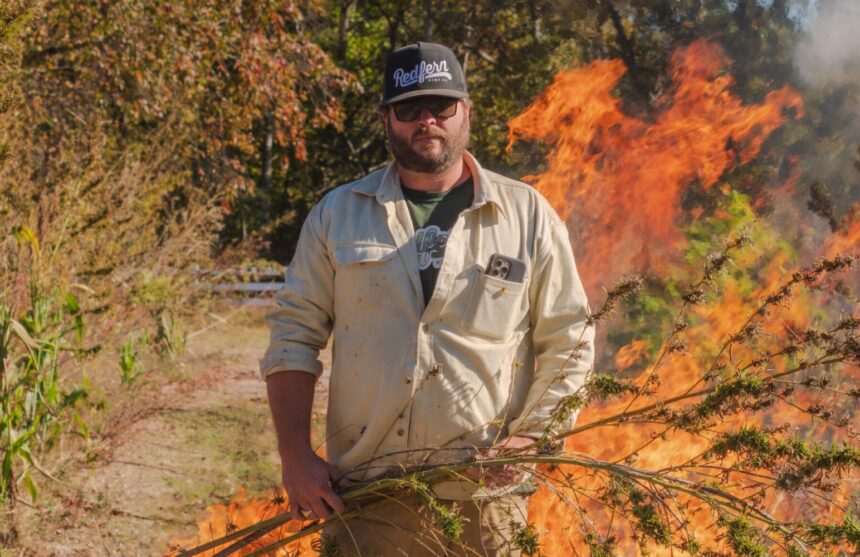
A $250,000 hemp crop goes up in smoke in Caroline County, exposing a regulatory trap that threatens Virginia’s entire hemp industry.
Regulatory Barrier
The state requires a 25‑to‑1 CBD‑to‑THC ratio, beyond the 0.3% THC ceiling set by federal law.
Farmers must keep total THC under 0.3% while forcing CBD to be at least 25 times higher than THC—an impossible genetic ratio.
Economic Fallout
Redfern estimates losing a quarter‑million dollars worth of cash crop, and each mandatory test costs hundreds of dollars.
Only ten to twenty hemp growers remain statewide, down from over 1,100 in 2019, as processors shut down and the market collapses.
Industry Response
Redfern and his team partnered with Idaho National Laboratory to develop hemp‑based building materials, hempcrete, insulation and animal bedding, aiming for a sustainable industrial future.
“The cannabinoid market was supposed to fund the industrial side,” he says. “Now the dream is dead without legal smokable products.”
Corporate Influence
Corporate cannabis operators, including Columbia Care, GLeaf and Jushi, dominate the Virginia Cannabis Control Authority and push legislation that marginalizes small growers.
Regulators belong to a network called CANNRA, which excludes farmers and excludes anyone who actually touches the plant, creating a “plant‑toucher” problem, says operations manager Joe Domino.
Legal Battle
Out‑of‑state medical operators have filed lawsuits against Virginia businesses, alleging illegal sales of hemp‑derived cannabinoids.
Redfern expects countersuits and a prolonged legal fight that may force farmers to sue simply to avoid jail.
Current Reality
Farmers must turn their smokable crop into non‑inhalable oils to stay compliant, destroying the very product they hoped to sell.
“We took the black market off the streets, built a tax‑paying system, and now the state is killing it,” Redfern laments as he prepares to plow the field under.
Support independent reporting by donating to RVA Magazine; every dollar keeps local journalism alive.