

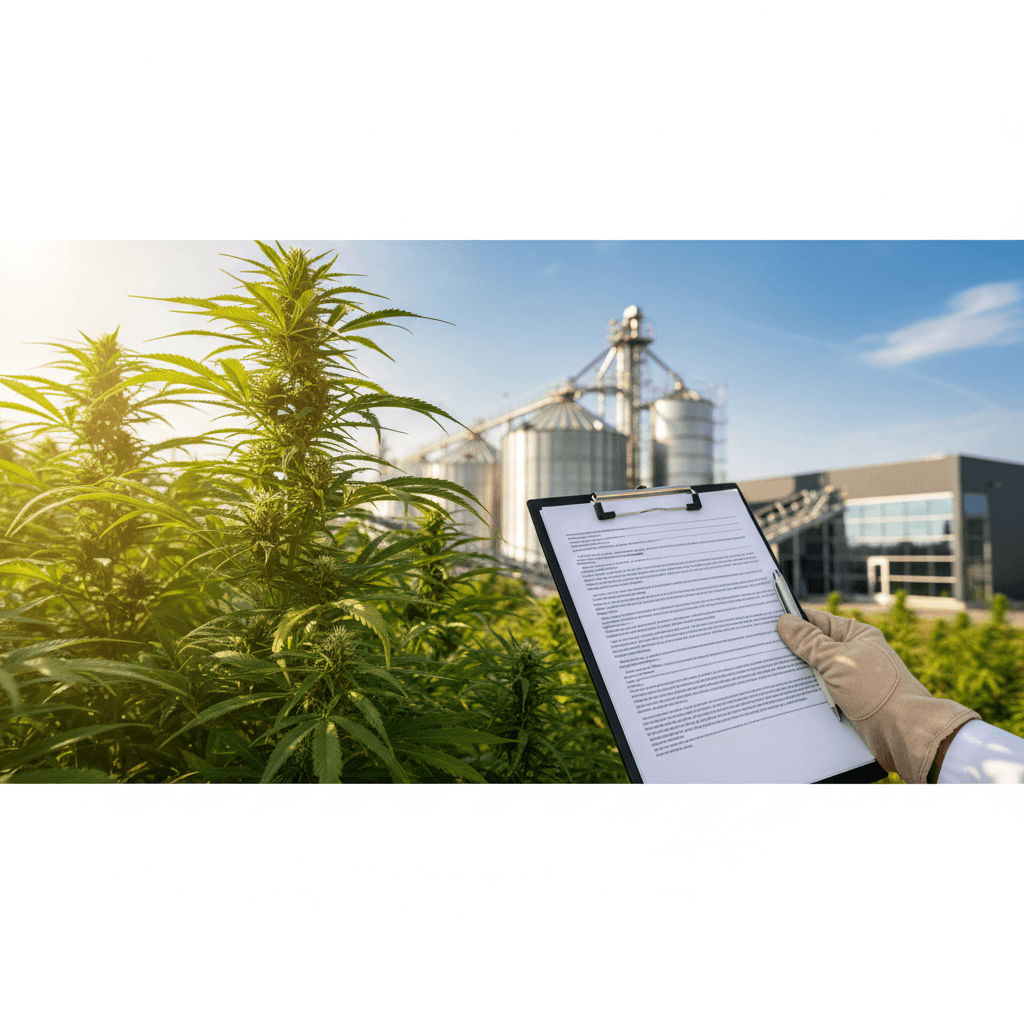
The 2018 Farm Bill and the Re‑legalisation of Industrial Hemp
When President Donald Trump signed the Agriculture Improvement Act of 2018—commonly known as the 2018 Farm Bill—into law, it marked a turning point for a crop that had been sidelined under federal prohibition for decades. The legislation, championed in part by Kentucky Senator Mitch McConnell, included the Hemp Farming Act, which removed industrial hemp from the list of controlled substances and established a federal framework for its cultivation, processing, and sale.
Prior to the bill, hemp could only be grown under tightly controlled pilot programs, despite its long history as a source of fiber, seed oil, and building material. By defining industrial hemp as cannabis plants containing no more than 0.3 % delta‑9‑tetrahydrocannabinol (THC) on a dry‑weight basis, the law aimed to distinguish the commodity from marijuana varieties cultivated for psychoactive effects. This clear threshold opened the door for research, state‑level licensing programs, and a nascent commercial market.
Market Dynamics and Regulatory Ambiguities
Since the bill’s enactment, the hemp sector has experienced rapid growth. The U.S. Department of Agriculture (USDA) reported that licensed hemp acreage rose from virtually zero in 2014 to more than 500 000 acres by 2022, with a farm‑gate value exceeding $800 million in that year【USDA, 2023】. Yet, the swift expansion has also exposed gaps in the regulatory framework, particularly around hemp‑derived cannabinoids.
One notable development is the rise of delta‑8‑THC products. Because delta‑8 can be synthesized from legally grown hemp CBD, many manufacturers began selling it in vape cartridges, edibles, and tinctures. These items often produce mild intoxicating effects, yet they exist in a legal gray area: the 2018 Farm Bill does not explicitly address delta‑8, and the Food and Drug Administration (FDA) has not issued comprehensive rules for its use in food or dietary supplements. Consequently, a patchwork of state responses has emerged—some states have banned delta‑8 outright, while others permit its sale with limited oversight【FDA, 2022】.
This regulatory vacuum has led to concerns about product consistency. Independent testing has shown wide variances in potency, occasional presence of residual solvents, and inaccurate labeling, which can erode consumer trust and put compliant businesses at a competitive disadvantage【Hemp Industries Association, 2023】. For farmers who invested in hemp based on the promise of a stable agricultural commodity, the uncertainty surrounding cannabinoid derivatives adds a layer of risk that complicates long‑term planning.
Implications for the Hemp Sector and Global Policy
The ongoing ambiguity affects multiple stakeholders. Growers face fluctuating demand as processors shift between traditional fiber markets and the more volatile cannabinoid space. Companies that adhere to rigorous third‑party testing and transparent labeling often find themselves competing with lower‑cost products that bypass those standards, potentially undermining market integrity.
From an investment perspective, the lack of a clear federal stance on novel hemp cannabinoids creates uncertainty that can deter institutional capital. Analysts note that a stable regulatory environment is a prerequisite for scaling operations, securing financing, and achieving economies of scale【Brightfield Group, 2023】. The situation in the United States is being watched closely by policymakers in Europe, Canada, and Australia, where similar debates about hemp‑derived cannabinoids are unfolding.
Looking ahead, the next Farm Bill—currently under discussion in Congress—offers an opportunity to clarify these issues. Potential amendments could explicitly regulate or prohibit certain intoxicating hemp derivatives, or establish a federal pathway for their safe production and sale under FDA oversight. Such clarity would help align the market with the original intent of the 2018 Farm Bill: to re‑establish hemp as a legitimate, sustainable agricultural commodity while protecting consumers and fostering fair competition.
For readers seeking a deeper dive into the post‑Farm Bill challenges facing the industrial hemp industry, the original analysis provides valuable context and data.