

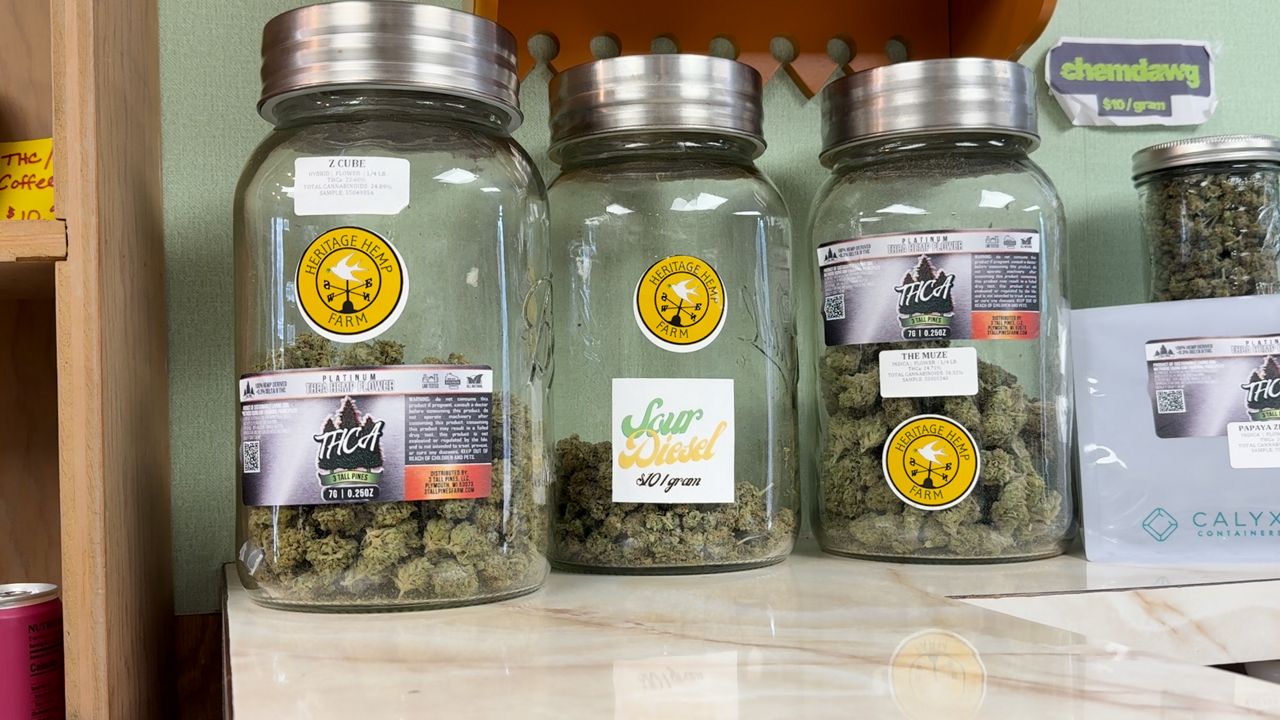
Uncertainty Clouds Wisconsin Hemp Industry as Federal Rules Shift
In November 2025, a provision tucked into the federal government funding bill signed by President Donald Trump effectively banned the sale of many hemp‑derived products, creating immediate ripple effects for growers across the state. The rule is set to take effect in November 2026, leaving Wisconsin farmers — such as Jay and Narin Selthofner of Heritage Hemp Farm in Ripon — facing the prospect of losing the market they built after the 2018 Farm Bill legalized hemp cultivation.
The Selthofners launched their operation in 2018, growing hemp on Narin’s family farm and selling products through a Ripon storefront. Narin described the venture as “a great way to bring something back into a small farm that otherwise is a tricky thing to maintain and operate.” Jay noted that early support from the U.S. Department of Agriculture helped the farm expand, but the recent federal shift has turned that progress into uncertainty.
“One month, the government is giving us money to open a store and sell these products, and the next month they’re shutting the whole thing down,” Jay said, highlighting the abrupt policy reversal that threatens to force the farm to abandon its inventory, equipment, and even its retail space.
State Lawmakers Move to Fill the Regulatory Gap
Recognizing the impending vacuum, Wisconsin legislators have begun drafting state‑level rules aimed at providing clarity and consumer protections. State Senator Patrick Testin (R‑Stevens Point) is sponsoring a bill that would:
- Define “hemp‑derived cannabinoids” (HDCs) with precise language;
- Restrict the sale of HDC products to consumers aged 21 and older;
- Mandate third‑party product testing and clear labeling of potency and ingredients.
Testin emphasized that the goal is not to stifle the industry but to establish “basic parameters and guidelines” so businesses can operate safely while lawmakers await a potential federal reversal.
Senator LaTonya Johnson (D‑Milwaukee) has introduced companion legislation with similar provisions. She stressed the need for consumer protection regardless of how long the industry persists, stating, “This consumer protection is needed, whether this industry will continue to progress for a year, or whether it will continue to progress for numerous years.” Johnson indicated she would support Testin’s bill if it advances, noting that either approach would deliver the regulatory certainty growers seek.
Both lawmakers acknowledge that, under the current federal language, hemp remains technically legal in Wisconsin; however, the ambiguous status creates compliance challenges for retailers, processors, and farmers alike. Testin expressed hope that Congress will revisit the issue before the November 2026 effective date, warning that continued uncertainty could destabilize the state’s emerging hemp sector.
Industry Voices Call for Actionable Solutions
For the Selthofners, the priority is simple: a state framework that allows their farm to stay open. Jay summarized the sentiment shared by many Wisconsin growers: “In order to keep Wisconsin going in any way, shape or form, we’re going to need legislation at the state level to do so.”
While the federal provision remains pending implementation, the push for state‑level standards reflects a broader trend observed in other states grappling with conflicting federal and local cannabis policies. By establishing clear definitions, age restrictions, testing requirements, and labeling rules, Wisconsin aims to protect consumers, support legitimate businesses, and provide a stable environment for agricultural innovation.
Read the original coverage from Spectrum News 1 Here.