

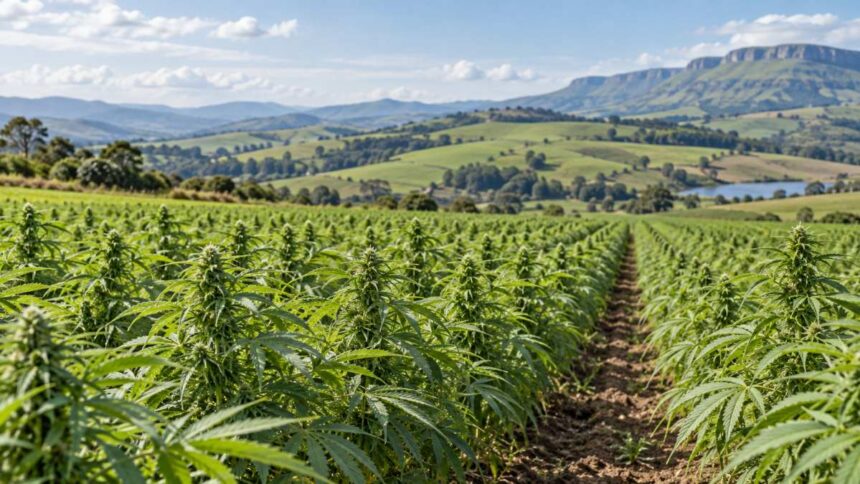
KwaZulu-Natal is moving to expand commercial hemp production, with 500 permits already issued across the province and a new programme launched to produce certified hemp seed locally.
The KwaZulu-Natal Department of Agriculture and Rural Development officially launched the KZN Hemp Seed Multiplication Programme at KwaMaveshe, within Ray Nkonyeni Local Municipality, on Thursday, 8 October 2026.
At the same event, the province opened its 2026/27 hemp planting season.
Five hundred permits have been issued to growers across all 11 districts, and district coordinators and farmers have received training on regulatory requirements.
The programme addresses seed access, planning to produce certified low‑THC hemp seed locally, which should lower costs and give farmers certainty about the material they plant.
The move comes as South Africa continues attempting to develop a commercial hemp and cannabis value chain rather than treating cultivation solely as an agricultural exercise.
South Africa is building a full hemp and cannabis value chain, with the Department of Trade, Industry and Competition targeting 10% annual industry growth and expanding into processing, manufacturing and exports.
The strategy covers industrial hemp, medicinal cannabis, CBD products and hemp‑based materials for construction, automotive and other sectors.
KwaZulu‑Natal is one of three provinces identified as having strong hemp‑production potential.
Importantly, the province is also attempting to address what happens after farmers have grown the crop
Permit holders are being linked to processors through off‑take agreements, giving growers guaranteed buyers for their harvest.
This commercial linkage mirrors the national approach, as manufacturers and processors commit to off‑take opportunities.
The regulatory framework now allows a THC limit of 2% for industrial hemp, up from 0.2% under the new Plant Improvement Act effective 1 December 2025.
While hemp and cannabis come from the same plant species, commercial hemp is cultivated primarily for agricultural and industrial uses and is regulated according to its THC content.
Commercial hemp is cultivated for agricultural and industrial uses and is regulated by its THC content, unlike cannabis.
KwaZulu‑Natal’s programme will test whether locally produced seed can connect farmers to processors and create a sustainable downstream market.
Participating grower Thobekile Mbotho, who co‑owns 50 hectares with nine others and farms five hectares of hemp, said advisory support helped her secure a permit and training.
Farmers interested can approach their nearest KwaZulu‑Natal Department of Agriculture office, where extension officers will assist with permit applications.
The true measure of the programme’s success will be whether the 500 permits translate into viable commercial farms and a thriving hemp industry in the province.