

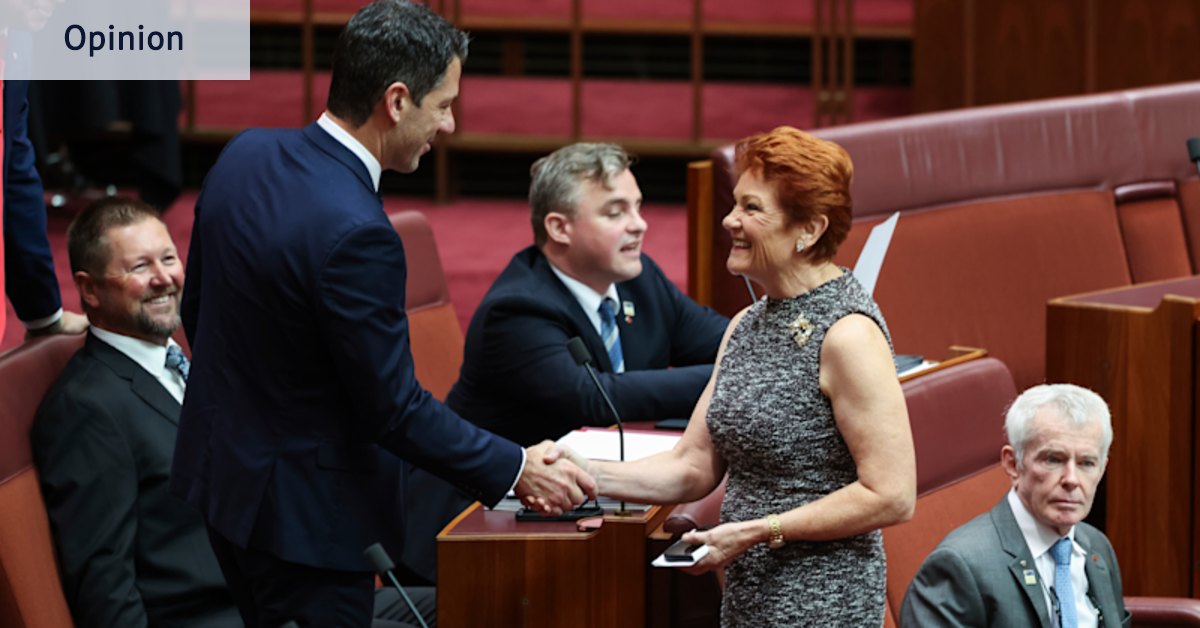
Senator Alex Antic promotes a MAGA‑aligned health‑reform briefing
On 16 June 2026 Senator Alex Antic announced via email that he would host a parliamentary briefing featuring Professor Ramesh Thakur and Dr David Bell of the International Health Reform Project (IHRP). The IHRP is an initiative of the Brownstone Institute, a United States‑based think tank that has aligned itself with the MAGA movement and previously produced material praised by UK Reform Party leader Nigel Farage. The Brownstone Institute has been vocal in calling for a “massive reform or replacement” of the World Health Organisation (WHO) and supported the Trump administration’s decision to withdraw the United States from the agency.
When asked whether Australia should follow a similar path, Antic responded with a terse email that nevertheless questioned the role of supranational health bodies. He wrote, “The IHRP’s stated focus is to ‘Re‑define international public health anchored in ethics, individual agency, and national sovereignty’. Does The Sydney Morning Herald find that controversial?” and later asked who should set Australia’s health agenda, implicitly suggesting a shift away from the WHO.
Health policy experts note that the WHO remains the primary coordinating body for international disease surveillance, vaccine equity, and emergency response. Calls to withdraw or dramatically reform the organisation are rare among mainstream Australian politicians and have been criticised by public‑health academics who warn that such moves could undermine Australia’s capacity to respond to cross‑border health threats.
Andrew Hastie pushes for a sovereign AI capability
In a separate development, Opposition industry spokesman Andrew Hastie used the annual Tom Hughes oration to liken the global artificial‑intelligence race to the Cold‑War nuclear arms race. Speaking before a gathering of Liberal Party members at Sydney’s Shangri‑La hotel on 15 June 2026, Hastie argued that Australia must build its own AI infrastructure or risk having its strategic future shaped by other nations.
He proposed appointing an “ambassador for AI” based in Silicon Valley, modelled on Australia’s existing ambassador to the Holy See in Rome. The suggestion reflects a growing concern among policymakers that Australia lags behind the United States, China, and the European Union in AI research funding and talent retention. While the idea of a dedicated AI envoy has been floated in think‑tank circles, no concrete funding or legislative framework has yet been announced.
Analysts caution that establishing a credible sovereign AI capability will require sustained investment in education, research grants, and public‑private partnerships—areas where Australia has historically spent less per capita than its peers.
News Corp Australia faces payroll problems
Media workers at News Corp Australia reported a payroll bungle on 13 June 2026 that delayed wages for several days, resulting in bank “dishonour fees” for affected staff. The Media, Entertainment and Arts Alliance (MEAA) wrote to the company on the evening of the incident, receiving assurances that payments had subsequently been processed. The union warned that the delay was part of a broader pattern of late or incorrect payments, citing an earlier Enterprise Agreement breach identified in 2025 that left dozens of employees owed thousands of dollars in backpay.
A News Corp Australia spokesperson maintained that the company is contractually obliged to pay staff on the 15th of each month, noting that when the date falls on a Monday wages are normally issued the preceding Friday. The spokesperson claimed that no employee was ultimately paid late, despite the processing error that triggered the bank fees.
Industry observers say recurring payroll issues can erode trust between employers and journalists, potentially affecting morale and newsroom stability. The MEAA continues to urge staff to consider union representation as a safeguard against future payment disputes.
For the original source of this story, see Here