
Bipartisan Lawful Hemp Protection Act Introduced in Congress
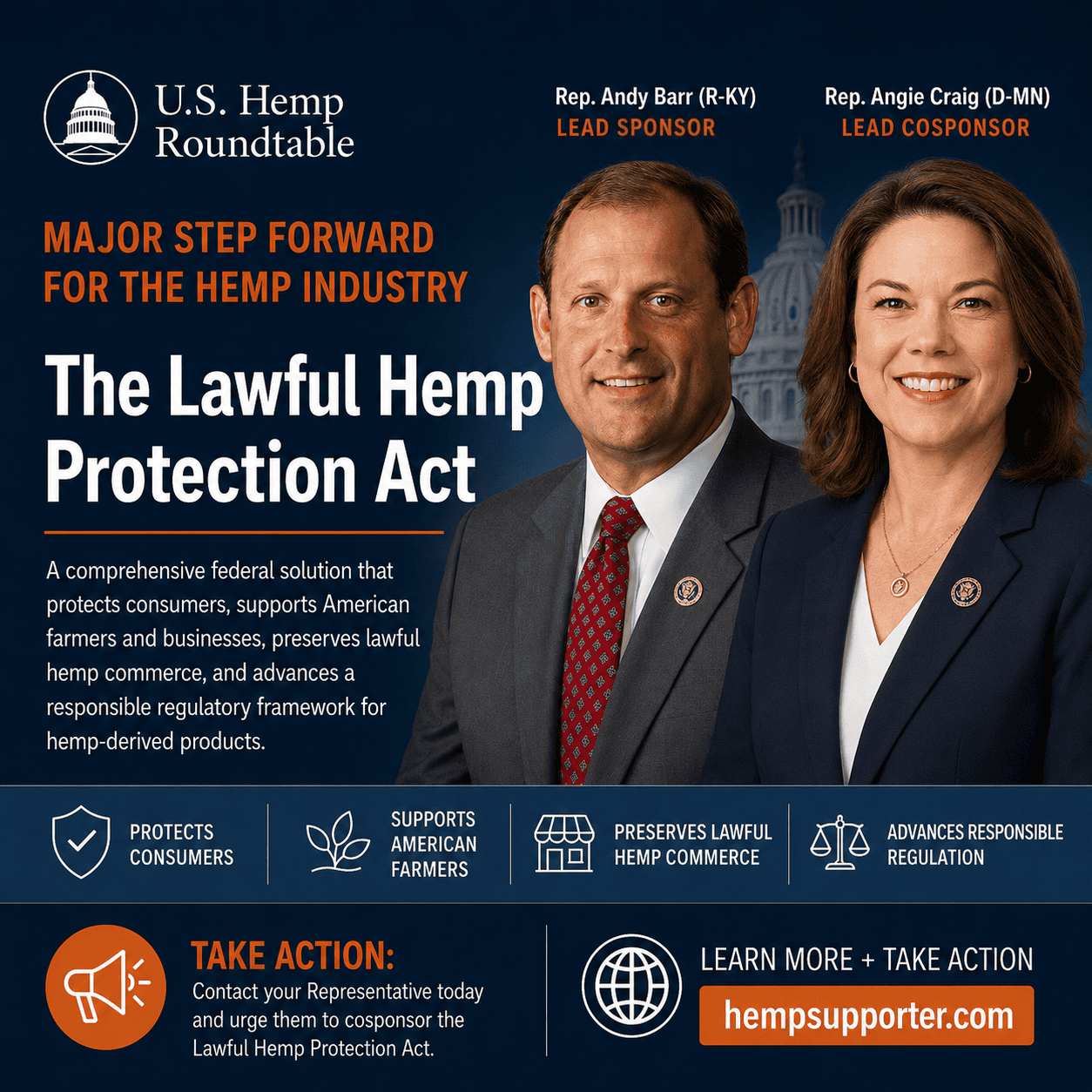
Representatives Andy Barr (R‑KY) and Angie Craig (D‑MN) have jointly introduced the Lawful Hemp Protection Act, a comprehensive bill aimed at creating a national regulatory framework for hemp‑derived consumer products while preserving lawful hemp commerce. The legislation arrives at a pivotal moment, as a federal hemp ban provision tucked into the FY 2026 agriculture appropriations bill is slated to take effect this November.
Why the Bill Matters Now
The 2018 Farm Bill legalized hemp with a THC threshold of 0.3 % by dry weight, but subsequent regulatory ambiguity has left many hemp‑derived products in a legal gray area. The upcoming ban language would effectively prohibit a wide range of compliant items unless Congress intervenes. Rather than pursuing an outright prohibition, Barr and Craig’s proposal adopts a regulatory approach, directing federal agencies to set clear standards for safety, labeling, and taxation.
Core Components of the Legislation
The bill addresses several key areas that industry stakeholders have long called for:
- Federal pathway for consumable hemp products: Establishes a legal route for hemp‑derived foods, beverages, and supplements to be sold nationwide.
- Labeling and packaging rules: Mandates clear, consistent labeling that includes ingredient lists, allergen warnings, and QR codes linking to certificate‑of‑analysis data.
- Age verification: Requires 21+ labeling and robust age‑verification mechanisms for all hemp‑derived consumable products, mirroring alcohol and tobacco safeguards.
- Domestic sourcing requirement: Stipulates that cannabinoids in finished products must originate from hemp cultivated, processed, finished, packaged, and labeled within the United States.
- TTB oversight for beverages: Creates a federal permitting, registration, and supervision system under the Alcohol and Tobacco Tax and Trade Bureau for manufacturers of hemp‑derived cannabinoid products and wholesalers of hemp‑infused beverages.
- Prohibition of synthetic cannabinoids: Bans artificially modified or non‑naturally occurring compounds, targeting products that have raised safety concerns.
- Tax structure: Implements a milligram‑based excise tax of $0.05 per milligram of THC on hemp‑derived beverages, a 5 % tax on the sale price of other hemp‑derived cannabinoid products, and a 5 % tax on manufacturers’ sales revenue.
- Three‑tier distribution for beverages: Separates manufacturers, wholesalers, and retailers to prevent market concentration and promote fair competition.
- Medicare Advantage eligibility: Allows hemp‑derived cannabinoid products to be offered as a special supplemental benefit under Medicare Advantage plans.
- Interstate commerce protections: Preserves the ability to transport compliant hemp products across state lines.
- State and tribal flexibility: Allows states, territories, and Tribes to enact stricter regulations if they choose to do so.
Serving Limits and Scientific Oversight
One of the most consequential provisions revises the unworkable 0.4 mg total THC per container standard scheduled to take effect in November. Instead, the bill directs the Food and Drug Administration (FDA) to establish serving‑size limits through rulemaking and scientific review. If the FDA fails to act within one year, the legislation sets default limits:
- 5 mg THC per serving for ingestible products
- 50 mg THC per serving for inhalable products
- 50 mg THC per serving for topical products
These thresholds aim to balance consumer access with safety, aligning with dosage guidance used in clinical research on cannabinoids.
Industry and Advocacy Response
The U.S. Hemp Roundtable praised the bipartisan effort, noting that the bill reflects a science‑based, consumer‑focused approach rather than prohibition. In a statement, the organization highlighted its ongoing policy priorities:
- Reasonable, science‑based serving limits
- Strong consumer protections and age restrictions
- Clear federal pathways for compliant products
- Protection against dangerous synthetic cannabinoids
- Preservation of interstate commerce
- Avoidance of overly burdensome taxation or distribution rules that could disadvantage small businesses
The Roundtable also emphasized that the bill’s development included extensive stakeholder outreach, ensuring that farmers, retailers, manufacturers, and small businesses had a voice in shaping the final text.
What Supporters Can Do
Advocates are encouraged to contact their federal representatives and urge them to cosponsor the Lawful Hemp Protection Act. Broad bipartisan backing will be essential as Congress moves toward a final solution that safeguards consumers while maintaining a lawful market for hemp‑derived goods.
For more details on the bill’s text and the legislative process, see the original announcement Here.