
For more than a century, Harlem has helped define New York City’s world‑famous cannabis scene. From 1920s‑era jazz pioneers to the legal legends of today, Leafly honors the neighborhood’s deeply rooted influence on weed culture.
1914: New York begins restricting cannabis to medical use
In 1914 the Boylan Act was amended to place “Cannabis indica, which is the Indian hemp from which the East Indian drug called hashish is manufactured” on the city’s list of restricted substances. This marked the first time New York limited cannabis to medical purposes only. Exactly a century later, in 2014, the state reinstated medical cannabis, and in 2021 adult‑use possession and consumption became legal for those 21 and older (New York State Senate, 2021).
Related
Malcolm X: From legacy cannabis seller to iconic activist
1927: New York state prohibited the sale and possession of cannabis altogether
After more than a decade of medical‑only regulation, New York enacted a total ban on cannabis in 1927. The legislation aimed to “remove habit‑forming drugs and assert control over narcotic drugs,” according to historical analyses. A narrow exemption remained for medical preparations that combined cannabis sativa or indica with other ingredients in therapeutic doses.
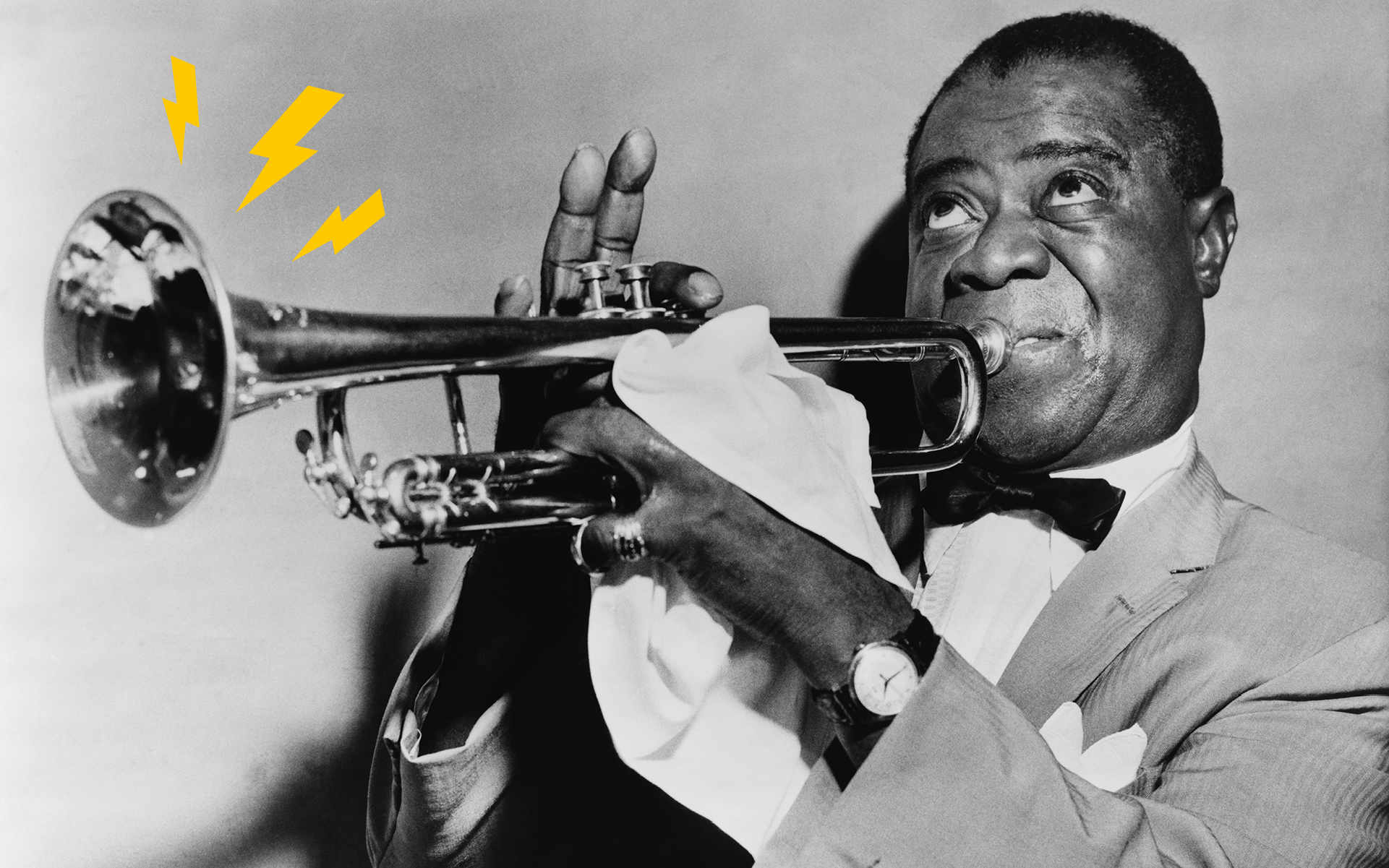
1920: Louis Armstrong was blowing loud
Jazz trumpeter Louis Armstrong reportedly first tried cannabis in the 1920s and continued to use it throughout his career, often before performances and recording sessions. He affectionately referred to the plant as “the gage” and described his circle of users as “the Vipers.” In a letter to his manager, Armstrong wrote, “All I want is a permit to carry that good shit… I will just have to put this horn down” if he could not smoke when he wished (AP Photo/John Rooney).
He also noted that cannabis felt like “a cheap drunk with much better thoughts than one that’s full of liquor.” The instrumental “Muggles,” recorded by Armstrong’s Hot Five, is widely believed to have been inspired by his cannabis use; at the time “muggle” was slang among jazz musicians for marijuana, long before the term entered popular culture via Harry Potter.
1923: Harlem’s legendary Cotton Club is founded
The Cotton Club opened in 1923 on 142nd Street and Lenox Avenue. British mobster Owney Madden launched the venue after purchasing it from boxer Jack Johnson, who stayed on as manager. While the club showcased top Black performers such as Duke Ellington, Ella Fitzgerald, and Lena Horne, its doors were closed to Black patrons, reinforcing a segregated “slumming” experience for wealthy white New Yorkers.
Musicologist Nate Sloan notes that the club’s décor often evoked plantation or jungle motifs, catering to the exotic fantasies of its affluent clientele. During Prohibition, Madden used the Cotton Club to sell bootleg beer, and the space occasionally served as a discreet spot where artists and visitors could find and consume cannabis.
1932: Cab Calloway’s ‘Reefer Man’
Cab Calloway, a regular headliner at the Cotton Club, released “Reefer Man” in 1932, popularizing the slang term “reefer” that persists among older generations. Despite the growing cultural acceptance of cannabis in the Jazz Age, legal restrictions tightened; the Uniform Narcotic Control Law of 1933 removed medical exemptions for cannabis use.
A 1930s investigative report estimated that Harlem hosted more than 500 individual sellers and roughly 500 “tea‑pads”—small storefronts where cannabis cigarettes were sold. Common names for the product included muggles, reefers, Indian hemp, weed, tea, gage, and sticks. Higher‑grade “panatella” cigarettes sold for about 25 cents, while the premium “gungeon” variety fetched around one dollar per cigarette, reportedly sourced from African hemp.
1937: National ban on cannabis begins decades of federal prohibition
The Marijuana Tax Act of 1937 effectively criminalized cannabis across the United States. Contemporaneous research, including a 1937 report from the New York Academy of Medicine, concluded that marijuana did not provoke violence, insanity, addiction, or lead to other drug use—contradicting the sensational claims of the 1936 film Reefer Madness.
1940s: Malcolm Little smokes and sells weed in Harlem before becoming Malcolm X
In his autobiography, Malcolm X (born Malcolm Litte) recalls hazy memories of smoking “reefer” at dance parties, shooting craps, and playing cards with friends. He describes turning on the reefers to lighten heads and lift spirits, offering a glimpse into how cannabis was woven into the social fabric of Harlem’s nightlife before his transformation into a civil‑rights leader.
1950s: New York drug treatment programs derailed by racialized Drug War
During the 1950s and 1960s, rising heroin addiction prompted New York to enact progressive treatment laws. However, because cannabis was classified as a narcotic, it became entangled in the same punitive framework. The subsequent passage of the Rockefeller Drug Laws in 1973 marked a shift toward harsh penalties, a shift historians link to the racialized criminalization of Black drug users in neighborhoods like Harlem.
After World II, heroin use surged, and Harlem earned the nickname “Dope Capital” of the nation, with the Federal Bureau of Narcotics estimating tens of thousands of active addicts in the city by the mid‑1960s.
1969: Summer of Soul is the Woodstock of West 125th Street
The 2021 documentary Summer of Soul (Oscar‑winner for Best Documentary Feature) captures the 1969 Harlem Cultural Festival, showcasing how cannabis use coexisted with vibrant musical performances and community solidarity. The film highlights the plant’s role in fostering creativity and cultural exchange during a turbulent era.
1972: Nixon declares Drug War, targets ‘Blacks and Hippies’
In a 1971 interview, former Nixon domestic policy chief John Ehrlichman admitted that the administration’s drug policy was deliberately designed to disrupt anti‑war activists and Black communities by associating hippies with marijuana and Black Americans with heroin. This strategy led to aggressive policing, raids, and media campaigns that disproportionately affected Harlem residents.
1980s: Weed influences seeds of Hip Hop
Harlem’s streets incubated early Hip Hop, and hop culture, and while the plant rarely appeared explicitly in early rap lyrics, it was a common presence among musicians and dealers. Fab 5 Freddy, a Brooklyn‑born visual artist and Hip Hop pioneer, has described how Harlem’s legacy cannabis networks supplied the scene’s underground economy during this period.
1990s: Rappers make an underground legend notorious
Operating from a candy‑store‑slash‑juice bar in Harlem, Branson became a pivotal conduit for high‑grade marijuana and hash oils in the early 1990s. His reputation as a reliable “plug” earned name‑checks in tracks by East Coast heavyweights such as The Notorious B.I.G., The LOX, Nas, and Redman. Branson’s underground network helped sustain a steady flow of premium cannabis throughout the height of the War on Drugs.
2000s: Diplomats and Purple City brand Piff and Purple Haze
Shiest Bubz rose to prominence in the 2000s with his distinctive purple‑hued cannabis and a series of well‑produced mixtapes released under Purple City Productions. His collaborations with Harlem icons Cam’ron, Jim Jones, and Juelz Santana helped bridge the underground mixtape scene with mainstream rap, and many of those artists have since explored legal cannabis ventures. Footage of Bubz’s operations continues to circulate on platforms like YouTube, offering a visual record of Harlem’s evolving market.
Just under a decade after medical cannabis returned to New York in 2014, and roughly two years since adult‑use was legalized in 2021, Harlem remains at the forefront of the city’s celebrated weed culture.
Source: Here