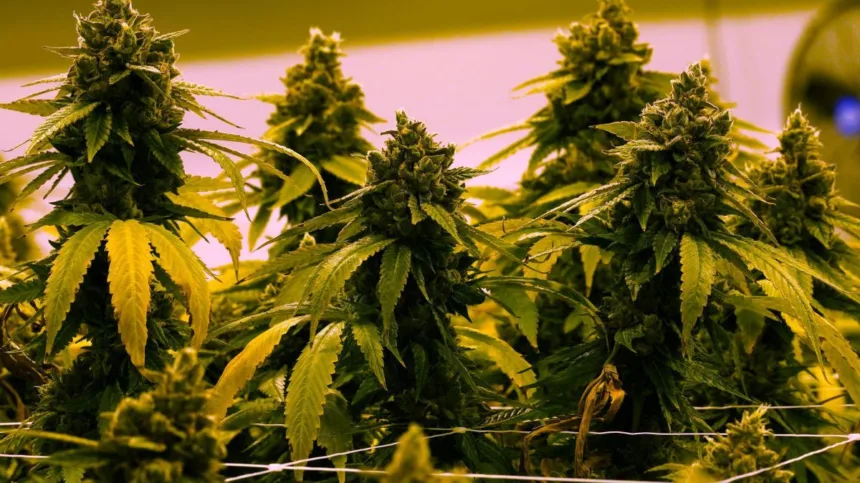
Federal Ban Threatens Jobs and Billions
A federal ban scheduled for December 11 2026 will outlaw thousands of hemp‑derived CBD and THC products across the United States. The rule, which caps THC at 0.4 mg per container, risks wiping out hundreds of thousands of jobs and tens of billions in economic activity.
The restriction applies to gummies, oils, beverages, tinctures and topicals made from hemp. Marijuana sold through state‑licensed medical and recreational dispensaries remains exempt.
Adrian Bruneau, a former Marine Corps aviator who battled post‑traumatic stress after deployments in the Balkans and the Middle East, credits CBD gummies with restoring his sleep. He says the product is “restorative to the human body,” a benefit he fears will vanish under the new rule.
John R. Gordon, cofounder of the American Alternative Care Policy Network, warns that veterans, first responders, frontline workers and trauma survivors have built daily wellness routines around these products. He says the loss would undermine proven coping mechanisms for many.
Under the 2018 farm bill, hemp is defined as cannabis containing no more than 0.3 % THC by dry weight, a threshold that allowed a booming market for CBD foods, drinks and skincare. Federal oversight has lagged behind the industry’s rapid expansion.
Republican Senator Mitch McConnell of Kentucky voiced concern that the rapid growth of high‑dose and synthetic THC items sold at gas stations could expose children to intoxicating substances.
Senator Rand Paul of Kentucky called the proposal “the most thoughtless, ignorant” measure affecting the industry, and he has joined Democratic Senator Amy Klobuchar of Minnesota to back legislation that would let states opt out of the federal restriction, a plan supported by lawmakers in Texas and Virginia.
Industry leaders warn that the ban would cost hundreds of thousands of jobs and tens of billions in revenue; Ronan Kennedy, CEO of cbdMD, and Marie La France, cofounder of Louie Louie hemp seltzers, argue for stronger oversight instead of an outright prohibition.
Patients continue to rely on hemp‑derived cannabinoids for chronic pain, sleep disorders, epilepsy and trauma recovery, even though FDA‑approved medical uses remain limited; Nicole Hemmway of the U.S. Pain Foundation notes that countless sufferers turn to topical and edible CBD after other treatments fail.
The ban remains scheduled for December 11 2026 while bipartisan congressional efforts pursue flexible alternatives that preserve state autonomy and establish clearer product safety standards.