

Sen. Ted Budd’s Push to Enforce Hemp Restrictions Sparks Bipartisan Debate
In early August 2026, Senator Ted Budd (R‑NC) attempted to remove a temporary delay that would have postponed new federal limits on intoxicating hemp products. The delay, embedded in the Senate’s continuing resolution, was designed to give lawmakers additional time to craft a broader regulatory framework. Budd’s amendment, S.Amdt. 6747, sought to strike that delay and keep the original November 12, 2026 effective date intact.
Background: Federal Hemp Law and the Continuing Resolution
The restrictions Budd defended originated from a law passed in November 2025 that revised the federal definition of hemp. Under the change, any final hemp‑derived cannabinoid product containing more than 0.4 milligrams of combined total THC and similar cannabinoids per container would no longer qualify as legal hemp. The measure was set to take effect 365 days after enactment — November 12, 2026.
Section 2019 of the continuing resolution temporarily postpones those changes until December 11, 2026. By voting to table Budd’s amendment on August 8, the Senate kept the delay in place, with a final vote of 61‑32. Notably, the opposition crossed party lines, with 21 Republicans and 11 Democrats supporting the tabling motion.
Arguments from Supporters and Opponents
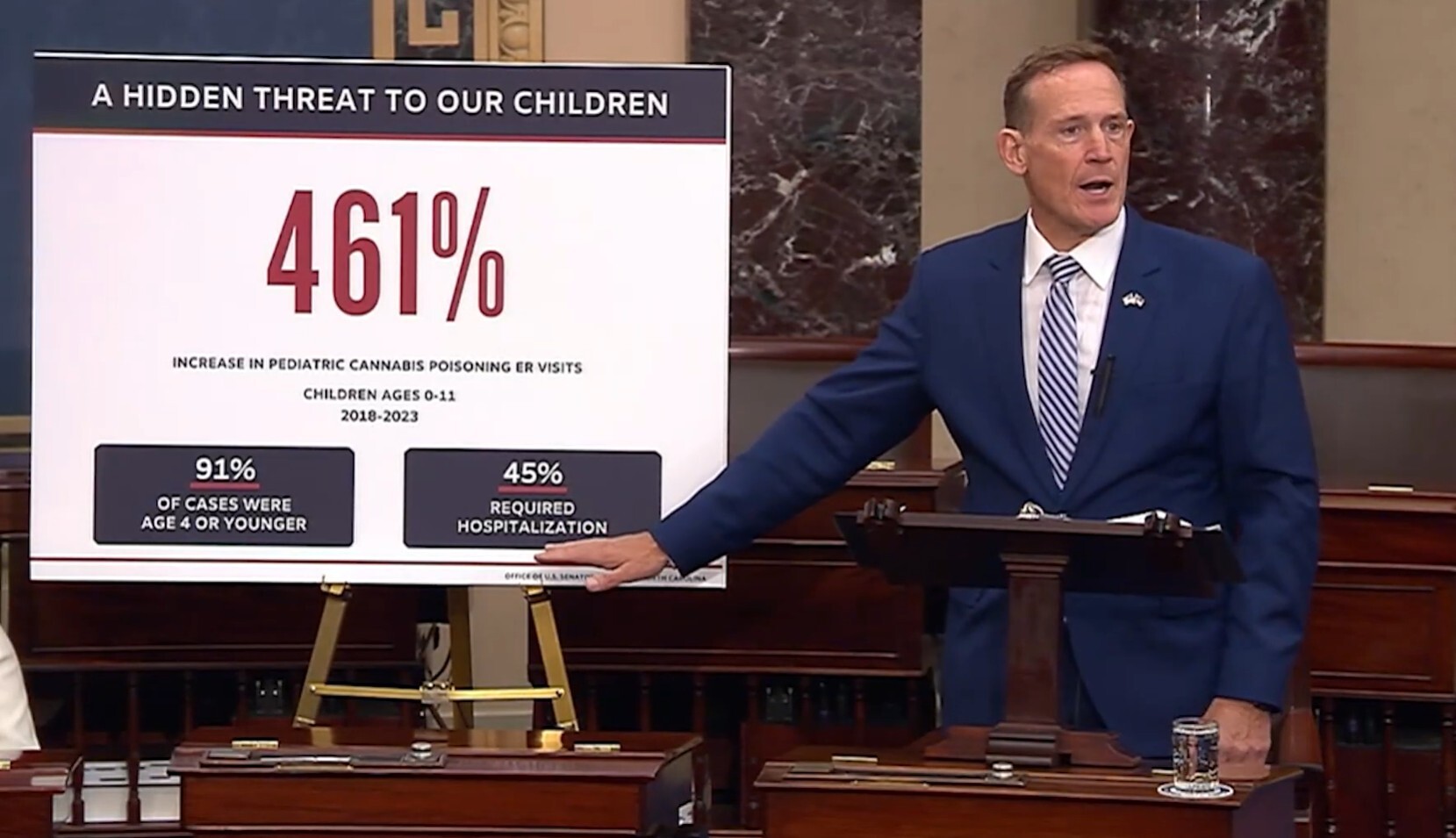
Budd framed the issue as a matter of child safety, citing the widespread availability of products that mimic candy and snacks. On the Senate floor he said:
“Every parent in America wants the same thing: to know their child is safe… As United States senators, each of us has a responsibility to the millions of parents we represent to put the safety and welfare of American children first.”
He pointed to data from North Carolina showing a 969 % increase in cannabis‑coded emergency‑department visits among minors between 2017 and 2025, characterizing the trend as a public‑health crisis (NC Department of Health and Human Services).
Opponents of the amendment argued that the 30‑day delay would allow Congress to develop a more nuanced regulatory approach. A coalition of 105 organizations — including the US Hemp Roundtable, National Restaurant Association, and several North Carolina groups such as the NC Craft Brewers Guild and North Carolina Healthy Alternatives Association — urged senators to keep the delay, contending that extra time could be used to:
- Implement stronger age‑verification and labeling rules;
- Block imports of synthetic cannabinoids from China;
- Establish good‑manufacturing‑practice standards for hemp products.
The White House also weighed in. President Donald Trump reportedly spoke with Senator Budd about the issue, describing the conversation as a “friendly phone call” that did not include a request to withdraw the amendment. Additionally, CMS Administrator Dr. Mehmet Oz warned that lifting the delay could disrupt efforts to expand access to clinically appropriate full‑spectrum CBD for seniors and people with disabilities.
Impact on North Carolina
While the federal debate unfolded, North Carolina legislators grappled with House Bill 328, which would embed the same 0.4‑milligram THC limit directly into state law. The bill would also prohibit sales to anyone under 21 and ban underage possession. Although the Senate passed the conference report 37‑6 in July 2026, the House has repeatedly delayed consideration, leaving the measure stalled in the Rules Committee.
Supporters of HB 328, including law‑enforcement groups and Republican lawmakers, argue that a state‑level threshold would remain effective even if Congress later changes or repeals the federal rule. Critics, primarily hemp business owners and consumers, contend that an outright removal of most intoxicating hemp products would harm a growing industry and advocate instead for age limits, testing, labeling, and packaging requirements.
Looking Ahead
With the Senate’s continuing resolution approved 90‑6 — Senator Budd voting in favor despite his amendment’s defeat — the federal restrictions remain set to begin on December 11, 2026, unless further legislative action changes the timeline. Meanwhile, North Carolina’s legislature continues to search for a compromise that balances public‑health concerns with the economic realities of the hemp sector.
As the debate continues, stakeholders on all sides agree that the current largely unregulated market cannot persist indefinitely. The coming months will test whether lawmakers can craft a solution that safeguards children, preserves legitimate medical access, and provides a clear pathway for compliant hemp businesses.
For the original reporting on this developments, see the source article: Here