
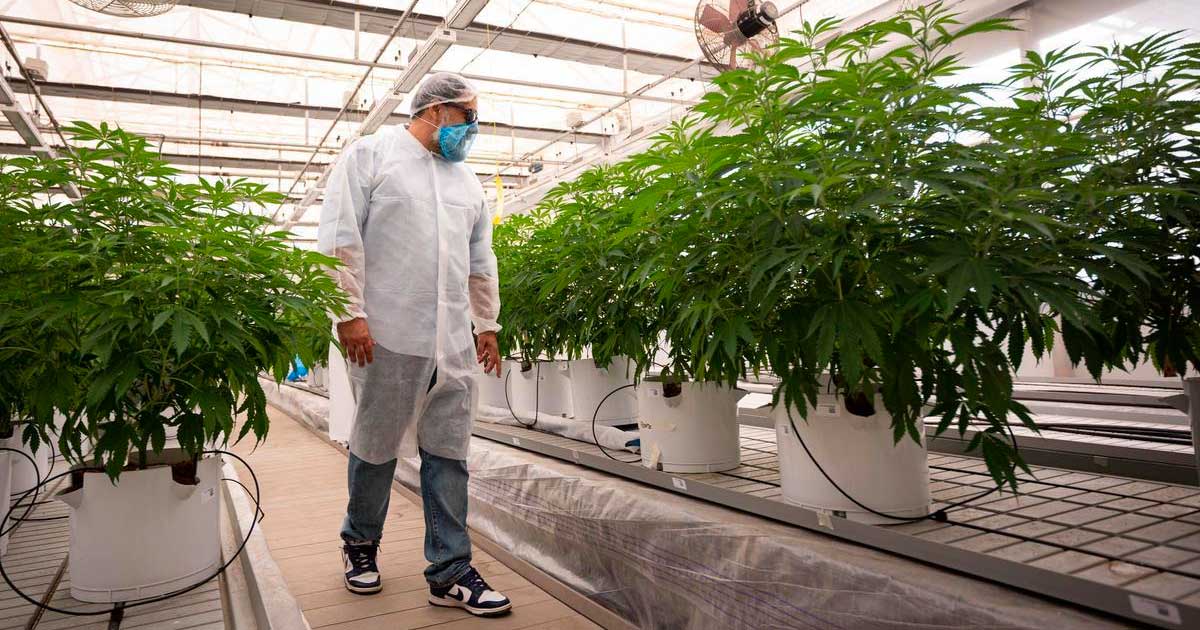
The Canary Islands have taken a concrete step into the medical‑cannabis sector after the region’s first certified cultivation site received official approval. Developed by Nivaria Tech on Tenerife, the project was authorized by the Spanish Agency for Medicines and Medical Devices (AEMPS) and is intended to establish the archipelago as a future hub for pharmaceutical‑grade cannabis production.
Situated on former farmland, the new facility integrates cultivation, post‑harvest processing, and pharmaceutical manufacturing under one roof. Nivaria Tech says this end‑to‑end setup is designed to satisfy EU Good Manufacturing Practices (GMP) while boosting efficiency and product quality.
The natural climate offers a competitive advantage
One of the project’s core strengths lies in the islands’ environmental conditions. Valeriano Rodríguez, plant manager at Nivaria Tech, explains that the abundant sunshine, steady trade winds, and minimal temperature swings allow cannabis to grow under natural light cycles that are difficult to replicate indoors.
“Other manufacturers, both in Europe and the United States, rely on artificial lighting. We will let the plants develop their active ingredients using sunlight, hoping the chemotypes already present can fully express themselves under solar light stress rather than artificial lighting,” Rodríguez notes.
These climatic factors enable outdoor cultivation and support a rapid production cycle: the company reports six harvests per year thanks to 60‑day crop rotations.
Technology and Traceability at the Heart of the Project
Beyond agronomy, Nivaria Tech has built a technology‑driven framework to meet pharmaceutical standards. The firm developed and patented its own plant‑traceability software, which monitors every step from cloning through harvesting, packaging, and laboratory testing.
The site also employs advanced contamination controls, including hydrogen peroxide generators and cryopasteurization units that eliminate bacterial contamination via cold treatment. According to the company, only three machines of this type are presently operational across Europe.
Security measures mirror pharmaceutical‑industry requirements: armed personnel patrol the perimeter, the infrastructure is reinforced, and a dedicated bunker stores finished medicinal products to comply with European regulations.
Rodríguez adds that the initiative reflects a commitment to expertise, the circular economy, and renewable‑energy‑powered operations, aiming to deliver a medication whose value extends from its therapeutic effect to its transparent traceability.
A Broader Vision for the Canary Islands
Nivaria Tech envisions the project as a catalyst for a wider pharmaceutical manufacturing ecosystem in the Canary Islands, a region that currently imports most medicines and has limited local production capacity.
The company argues that clearer regulations and stronger institutional backing could encourage other pharma firms to establish operations in the archipelago. “At the Ministry of Health and national levels, a synergy could be created that would allow the Canary Islands to host an AEMPS delegation and an inspection service for manufacturers,” Rodríguez says. “Right now many active‑ingredient producers hesitate because nothing is in place yet; they don’t want to be the first to set this up. We’ve set a precedent—not only for cannabis but for all pharmaceutical products.”
For more details, see the original report: Here