
CBD in Madison: From Highway Billboards to Barn‑Based Extraction
Driving along a Madison freeway, you’ll see billboards promising relief from pain, stress and anxiety with CBD oil. The surge of storefronts across the city reflects a booming market that blends low‑tech hustle with high‑tech machinery.
The Polakowski‑Wagner Partnership
Nick and Jessica Polakowski, a construction worker and an attorney, join forces with Lucas and Monica Wagner to produce CBD oil in a pole barn outside Brooklyn, Wisconsin. By day they maintain their professional lives; by night they operate a small‑batch extraction facility that recently marked its first anniversary.
From Farm to Bottle: The Extraction Process
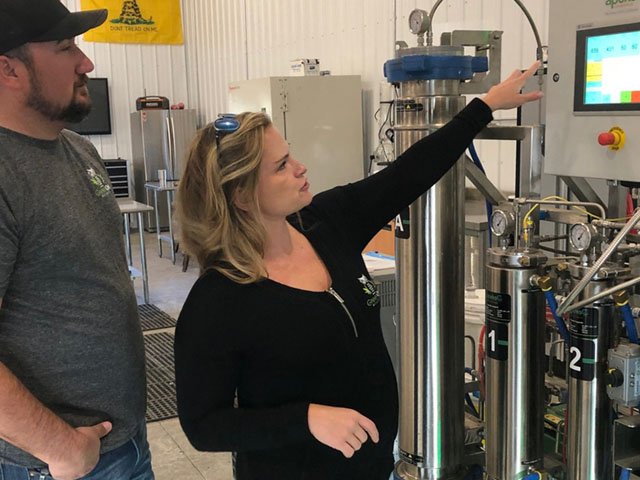
Dried hemp flower, bought from local growers in the fall, is stored in large plastic tubs inside the barn. The biomass is first ground in an industrial‑strength grinder, then baked in a convection oven to activate the CBD molecules. The heart of the operation is a CO₂ extractor—a stainless‑steel machine roughly the size of a car, equipped with pressure tanks, an air compressor and a computerized control panel.
Nick loads the powdered hemp into a cylinder, secures it with a wrench, and starts the machine via the computer interface. Pressurized, chilled CO₂ forces the oil through the system, where it drips into a collection vessel, carrying a strong, skunk‑like aroma that the team says they have grown accustomed to.
Business Scale, Pricing and Market Reach
Each batch yields roughly a quart of dark, molasses‑like oil from about a garbage‑can‑full of dried hemp. The Polakowski‑Wagner team produces 10‑pound batches, which translates to a one‑month supply for many consumers. An ounce of their tincture sells for $50‑$180, depending on potency, making it a high‑margin product in a crowded market.
The equipment cost about $250,000, and the owners hope to recoup that investment within two years. Although their primary sales channel is online, they now maintain a single retail location in Monona.
Quality Assurance and Testing
Because the CBD market lacks uniform regulation, Green Owl Wellness sends every batch to a independent laboratory in Milwaukee for analysis of cannabidiol concentration, pesticide residues, heavy metals and THC levels. This testing adds time to their production schedule, but the owners stress that transparency is essential.
“We’re not trying to break any land speed records,” Lucas notes, “but we want to be sure each bottle truly contains what the label promises.”
Regulatory Landscape and Consumer Caution
The U.S. Food and Drug Administration does not currently regulate CBD oil, and no standardized dosage or safety guidelines exist. The agency has issued warning letters to companies making unsubstantiated health claims, such as treating Alzheimer’s, diabetes or cancer. In fact, the FDA has found products that contain little or no CBD at all.
Wisconsin legislators are considering a bill that would criminalize knowingly false claims about hemp or hemp products. The DEA’s recent reclassification of CBD as a non‑controlled substance has prompted the FDA to prepare a public hearing on CBD regulation scheduled for May 31, with more than 600 written comments submitted, many from consumers advocating for clearer rules.
What Consumers Should Look For
Given the prevalence of unverified products, buyers should verify that a company provides recent third‑party lab results, knows its growers personally, and adheres to a transparent manufacturing process. The Polakowski‑Wagner team emphasizes that their small‑batch approach, rigorous testing, and honest communication are their safeguards against the “wild west” conditions that characterize much of the industry.
For more detailed insight into quality control in the CBD industry, Here.