
Hemp-Infused Seltzers Market Overview
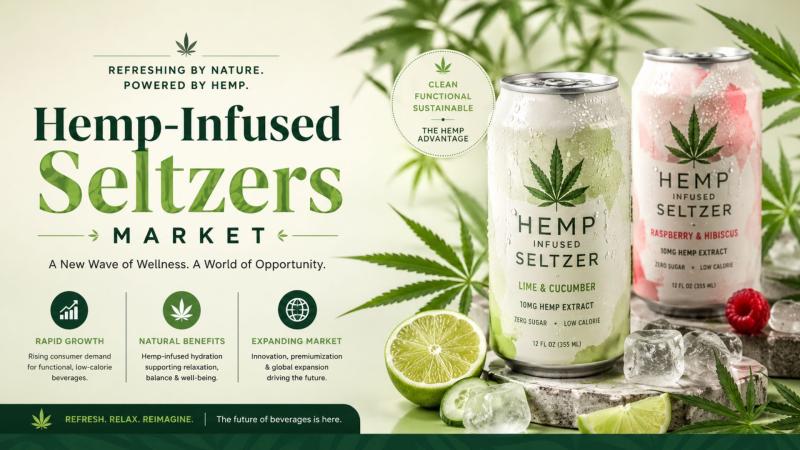
The global hemp‑infused seltzers market is projected to be valued at US$ 237.0 million in 2026 and is expected to reach US$ 786.9 million by 2033, expanding at a robust compound annual growth rate (CAGR) of 18.7% during the forecast period from 2026 to 2033. This growth reflects a broader consumer shift toward innovative, low‑calorie, functional beverages that align with wellness and lifestyle preferences. To explore the detailed findings, you can https://www.persistencemarketresearch.com/samples/32648.
Market Drivers and Trends
Several factors are propelling the market forward. Rising awareness of hemp‑derived ingredients, combined with increasing legalization and regulatory acceptance of hemp‑based products, has opened new avenues for beverage manufacturers. At the same time, the functional beverage sector is expanding as consumers seek clean‑label, plant‑based options that deliver refreshment without excess sugar or artificial additives. Hemp‑infused seltzers also appeal to those looking for alcohol alternatives that provide relaxation and wellness benefits without traditional intoxicating effects. For deeper insights tailored to specific business needs, you may https://www.persistencemarketresearch.com/request-customization/32648.
Segmentation Insights
The market is segmented by product type, usage occasion, and consumer demographics. Flavor profiles include citrus, berry, tropical, and herbal/botanical varieties. Consumers enjoy these seltzers during casual consumption, social gatherings, sporting events, outdoor activities, and moments dedicated to wellness and relaxation. Demographically, the core audience spans Millennials (25‑40 years), Generation X (41‑56 years), and Baby Boomers (57‑75 years), each group showing distinct preferences for flavor and occasion.
Regional Landscape
North America currently leads the global market, driven by favorable regulatory developments, strong consumer awareness, and a concentration of hemp‑focused brands. The United States remains the largest contributor, supported by growing acceptance of hemp‑derived products and expanding distribution channels. Canada also plays a notable role, leveraging its established cannabis‑industry framework. Europe represents an emerging market where increasing interest in plant‑based wellness products and evolving regulations are encouraging manufacturers to launch hemp‑infused offerings. The Asia‑Pacific region is projected to be the fastest‑growing market, fueled by rising disposable incomes, urbanization, and heightened awareness of functional beverages in countries such as Japan, Australia, South Korea, and Thailand. Latin America and the Middle East & Africa are likewise emerging as promising territories, with gradual regulatory progress and growing exposure to global beverage trends creating opportunities for market entrants. To access the full report, you can https://www.persistencemarketresearch.com/checkout/32648.
Innovation and Technology
Product innovation lies at the heart of market expansion. Manufacturers are employing advanced nano‑emulsion technologies to improve ingredient dispersion, enhance consistency, and extend shelf life. Artificial intelligence is increasingly used to analyze consumer preferences, identify emerging flavor trends, and accelerate product development cycles. Machine‑learning models support personalized marketing, enabling brands to deliver targeted recommendations. Internet of Things (IoT) solutions enhance manufacturing efficiency, quality monitoring, and supply‑chain visibility, while early adoption of 5G connectivity promises richer digital commerce experiences and immersive brand interactions through connected packaging and mobile engagement tools.
Market Highlights and Sustainability
A primary driver of market growth is the consumer shift toward healthier beverage alternatives that deliver functionality without excessive sugar, calories, or artificial ingredients. The rising popularity of alcohol alternatives further boosts demand, especially among younger demographics seeking social experiences without the drawbacks of conventional alcoholic drinks. Regulatory progress concerning hemp cultivation, processing, and commercialization continues to support market expansion across regions, providing manufacturers with greater flexibility to develop and distribute hemp‑based products. Sustainability also plays an important role; hemp is recognized for its relatively low environmental impact compared with many traditional crops, prompting brands to adopt sustainable sourcing, recyclable packaging, and eco‑responsible production processes to meet consumer expectations and corporate sustainability goals.
Key Players
The competitive landscape includes a mix of established beverage companies and specialized hemp brands. Notable participants are HEMPd, Kickback, Youngevity International Inc. Recess, Keef Brand, Kalo Hemp Infused Seltzer, Queen City Hemp, CannTrust Holdings Inc., Bevcanna, Hexo Corp., The Alkaline Water Co., Marley, California Dreamin, Daytrip beverages, New Age Beverages Corporation, and Harbor Hemp Company.
Future Outlook
Looking ahead, the hemp‑infused seltzers market is poised for substantial growth through 2033. Advances in ingredient science, beverage formulation, and hemp extraction methods are expected to yield more sophisticated products with improved taste, consistency, and functionality. Data‑driven approaches powered by artificial intelligence, predictive analytics, and consumer‑insight platforms will help companies anticipate trends and differentiate their offerings. Regulatory clarity surrounding hemp‑derived ingredients, labeling requirements, and distribution frameworks will likely encourage broader investment and market participation. Sustainability initiatives, premiumization trends, and increasing demand for personalized wellness solutions are projected to create additional growth avenues, ensuring the market remains dynamic and innovative.
Source: Here