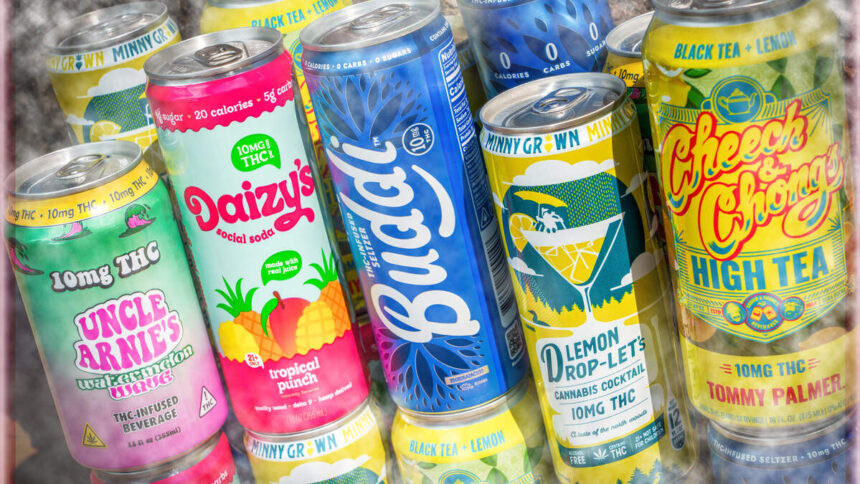
A federal deadline set for Dec. 11 could outlaw hemp‑derived THC drinks and edibles, ending a burgeoning $30‑plus‑billion market and jeopardizing South Carolina retailers.
Congress creates an industry for high-inducing hemp with no rules
The 2018 Farm Bill legalized hemp, allowing products with up to .4 milligrams of THC per serving to be sold nationwide.
Since then, companies across the United States, including South Carolina, have launched intoxicating hemp drinks, gummies and other edibles, generating an estimated $30.2‑38.7 billion in revenue according to a September Whitney Economics report.
Because the law created a market without federal safety standards, states such as South Carolina have lagged on regulation, leaving the industry in a legal gray area.
SC businesses adapt to looming ban
David Spang, founder of Coastal Green Wellness and Nine Dot Beverages, warned that the impending ban is “by far the biggest existential threat we’ve ever faced,” noting that up to 90 % of his product line could disappear.
Spang said he has already cut orders, reduced staff training and halted expansion plans, and warned that the loss of 90 % of his catalog could force his company out of business by December.
Emily Heintz, owner of Sèchey, entered the THC beverage market in 2021 as demand grew, making the drinks 60 % of her sales before deciding to close her Charleston storefront on Sept. 26.
Heintz cited heavy licensing costs and the uncertainty of the federal restriction as key factors in her decision to exit the brick‑and‑mortar market while continuing online sales of alcohol‑free alternatives.
She described the closure as a “final blow” after struggling with licensing requirements, and said she will keep selling alternative adult beverages and a private‑label alcohol‑free wine online.
Industry leaders, including Zach Serrins of the South Carolina Health Alternatives Association, argue that a blanket ban would eliminate small businesses and call for delayed enforcement, comprehensive testing, age restrictions and a fair retail framework.
They say a regulated system would protect consumers and sustain the sector, while law enforcement officials, the state GOP and some Republican legislators support a ban on public‑safety grounds.
They argue that unregulated products pose risks to children and impaired driving, and proponents of looser rules highlight potential medicinal benefits of THC despite marijuana’s illegal status in South Carolina.
Congress originally set a Nov. 12 2026 deadline for products exceeding .4 mg THC, later postponed by one month; officials say further delays are possible, and former President Donald Trump has advocated for regulation over prohibition.
The timeline uncertainty leaves businesses scrambling for clarity as they prepare for a possible shutdown in December.