
House Leaders Skip Hemp Ban in 2026 Farm Bill, Lawmakers Urge Action
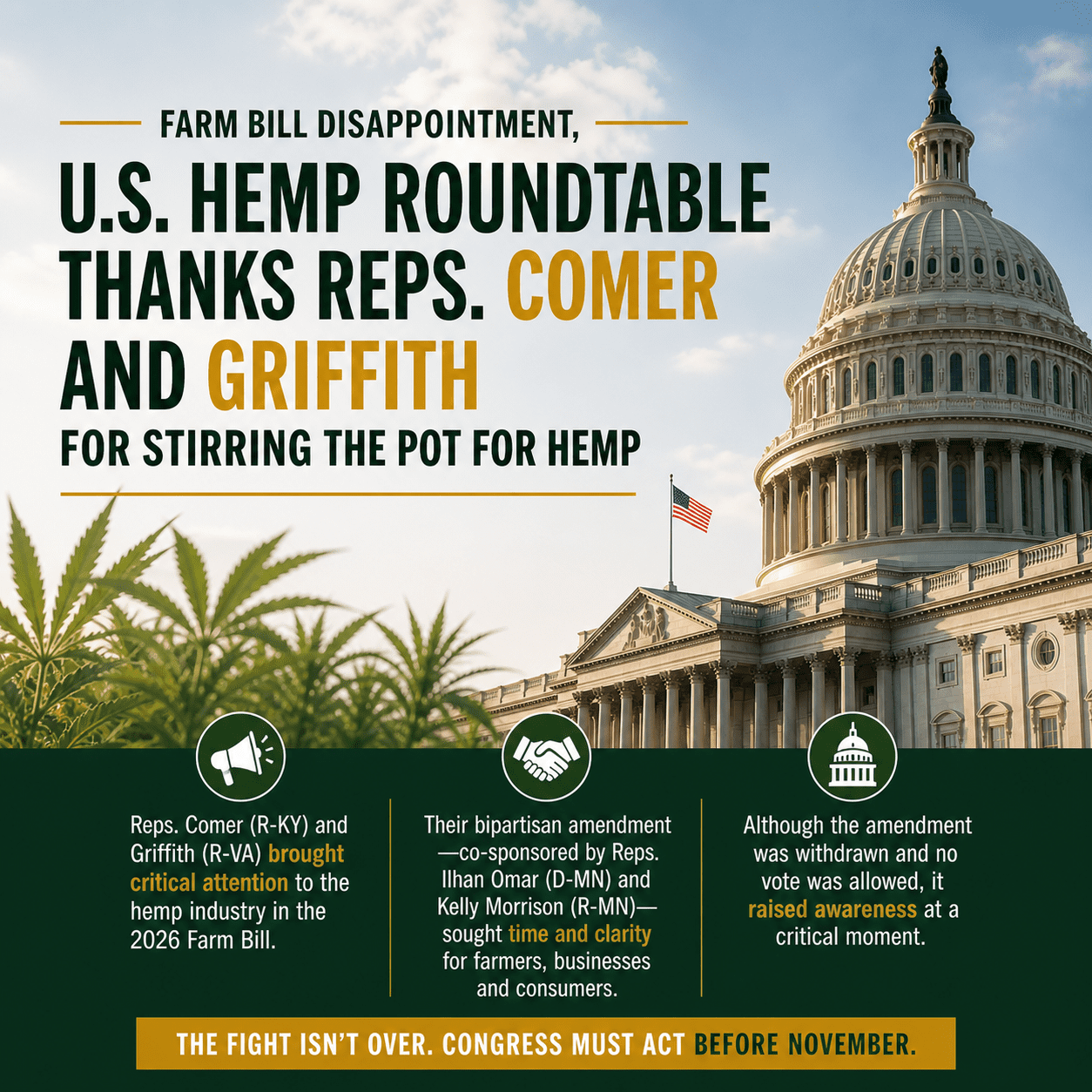
The recent version of the 2026 Farm Bill passed by House leadership did not include language to address the looming federal hemp ban, leaving producers and businesses in a state of uncertainty. While the bill moved forward without a direct remedy, several representatives used the opportunity to spotlight the issue and call for a thoughtful, evidence‑based approach.
The Stakes for the Hemp Industry
In testimony before the House Rules Committee, Representative James Comer (R‑KY) outlined the economic footprint of the American hemp sector. He noted that the industry supports roughly 320,000 jobs, generates about $28.4 billion in market activity, and contributes approximately $1.5 billion in state tax revenue each year【1†source】. Comer warned that without congressional action, an entire industry could be “largely eliminated,” jeopardizing livelihoods across rural communities.
He also stressed the need for additional time to craft a workable framework that accomplishes three goals: protecting existing jobs, curbing bad actors, and establishing clear, enforceable standards for product labeling and testing.
Lawmakers’ Call for Federal Oversight
Representative Morgan Griffith (R‑VA), a member of the Rules Committee and co‑sponsor of the proposed amendment, echoed Comer’s concerns. Speaking to Marijuana Moment, Griffith pointed out that many hemp products currently on the market lack third‑party testing, especially those imported from overseas. He described such products as “frankly, garbage,” highlighting the risk they pose to consumer safety.
Griffith argued that the Food and Drug Administration (FDA) should assume regulatory responsibility for hemp‑derived consumables, similar to its oversight of other food additives and supplements. At the same time, he emphasized that Congress must provide a transition period for businesses to adjust, which was the primary intent of the amendment he helped draft.
The Bipartisan Amendment and Its Impact
The amendment, co‑sponsored by Representatives Ilhan Omar (D‑MN) and Kelly Morrison (D‑FL), aimed to insert a provision delaying the enforcement of the hemp ban while Congress develops a comprehensive regulatory scheme. Although the amendment was ultimately withdrawn and never received a vote—due to opposition from House leadership—it succeeded in raising the profile of the issue at a critical juncture.
By bringing the matter to the floor, the lawmakers underscored that farmers, processors, and retailers need regulatory certainty to continue investing in innovation, workforce development, and sustainable practices.
Looking Ahead: What’s Next for Hemp Policy?
The conversation sparked by Comer, Griffith, and their colleagues signals a growing recognition that hemp policy cannot be addressed through omission. Stakeholders across the supply chain—ranging from seed producers to retailers—are urging Congress to:
- Establish clear federal standards for THC content, labeling, and testing;
- Empower the FDA to regulate hemp‑derived food and beverage products;
- Provide a reasonable implementation timeline that allows businesses to comply without undue hardship;
- Support research and extension services that help growers adopt best practices.
As the 2026 Farm Bill moves toward final passage, the hemp community will be watching closely to see whether lawmakers heed the calls for a balanced, science‑driven approach that protects both public health and the economic vitality of an industry that has become a significant part of America’s agricultural landscape.
For the original coverage of this development, see the article from Hemp Supporter: Here