

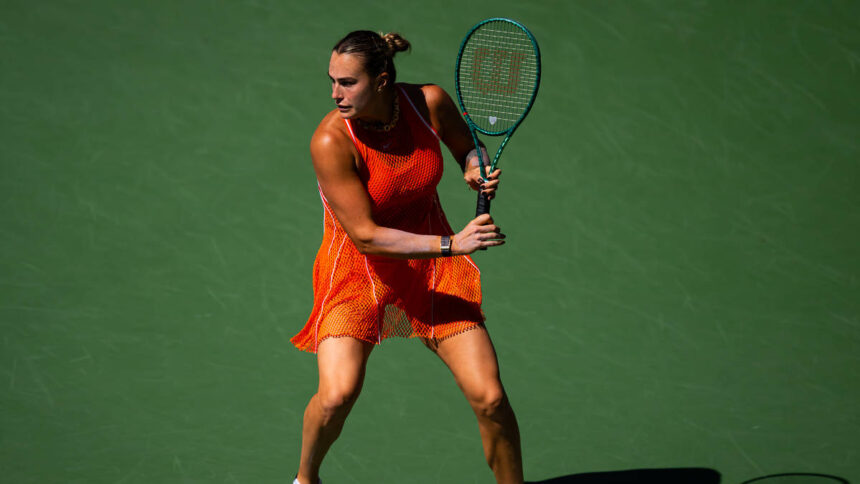
World number one Aryna Sabalenka stopped her US Open third‑round match after a strong marijuana odor drifted onto Louis Armstrong Stadium. She immediately called the umpire and asked for the source of the smell.
Sabalenka Stops Match Over Marijuana Smell
Sabalenka, the defending champion, was leading 1-0 in the first set against Kamilla Rakhimova when play was paused. She told the umpire, “Someone is smoking weed… it’s so strong,” and the official relayed the request to a colleague.
Umpire Eva Asderaki‑Moore responded by speaking into her radio and gesturing a smoking motion before the match resumed. The pause lasted only a few minutes, and Sabalenka eventually won 6‑3, 6‑4.
The incident marks the latest report of cannabis odor at Flushing Meadows, though most sightings have occurred on outer courts. Cannabis is legal to smoke in public outdoor spaces in New York State, and the US Open sits adjacent to Corona Park.
The United States Tennis Association declined to comment directly but reiterated its commitment to a smoke‑free venue. A USTA spokesperson said, “While we can’t control what takes place off the grounds, we remain vigilant to maintain a smoke‑free environment.”
Sabalenka said afterwards, “I told the team to ask people to smoke elsewhere because it’s hard to compete with that smell.” She added that wind may have carried the scent from the crowd or surrounding area.
When asked if she felt “high,” Sabalenka joked, “If they keep smoking I might get high,” showing the light‑hearted tone after the match. The comment drew a laugh from those nearby.
She is not the only player to notice the issue. British number one Katie Boulter described the aroma as “distracting.”
The USTA’s earlier statement emphasized ongoing vigilance despite the inability to police off‑site behavior. The body noted it cannot monitor activities outside the venue.
Distractions extended beyond odor in 2026, with top players Coco Gauff and Naomi Osaka raising concerns about influencer activity during points. The remarks came amid a broader push to modernize the fan experience.
Gauff said, “You must follow venue etiquette; perhaps brands should post clear signage for first‑time spectators.”
Osaka agreed, noting that “common courtesy demands respect for the sport and its etiquette.” She emphasized that fan conduct directly impacts player focus.
Both athletes praised the sport’s openness to new audiences but urged calmer stadiums for competition. Both called for a balanced approach that welcomes new fans while preserving match integrity.